How Grip Strength Training Can Help with Everyday Tasks and Arthritis Management
Quick Answer
Grip strength training strengthens the forearm flexors, extensors, intrinsic hand muscles, and thumb musculature, making everyday tasks such as opening jars, carrying groceries, turning keys, writing, cooking, and lifting objects noticeably easier. For individuals managing hand osteoarthritis or other forms of arthritis, carefully progressed, low-to-moderate intensity grip and hand exercises can help maintain or modestly improve grip strength, reduce stiffness, and support better hand function in the short term. Training must remain pain-free, balanced with extension work, and ideally guided by a doctor or qualified hand therapist when arthritis is present. Consistency produces functional benefits that transfer directly to daily independence.
Why Grip Strength Is a Foundational Physical Quality
Grip is involved in almost every manual interaction with the environment. Weak or easily fatigued hands turn routine activities into sources of strain, frustration, or avoidance. Research links higher grip strength with better functional independence, particularly with ageing, and with overall upper-body capacity.
The relevant musculature includes:
- Finger flexors (flexor digitorum profundus and superficialis) for crushing and holding
- Thumb muscles (especially adductor and opponens pollicis) for pinching
- Finger extensors for balanced control and release
- Wrist flexors and extensors for stability
- Larger forearm and upper-arm muscles that contribute to sustained holding
Training these qualities with progressive, specific exercises produces measurable improvements that appear in real-world tasks.
Everyday Tasks That Improve with Stronger Grip
| Everyday Task | Primary Grip Demand | How Targeted Training Helps | Practical Outcome |
|---|---|---|---|
| Opening jars, bottles, medication lids | Crush + pinch strength | Stronger finger flexors and thumb reduce required effort | Less strain, fewer “stuck” lids |
| Carrying shopping bags, luggage, water bottles | Support grip endurance | Farmer carries and hangs build sustained holding capacity | Longer carries with less fatigue |
| Turning keys, doorknobs, taps, tools | Pinch and rotational control | Pinch holds and wrist work improve precision and force | Easier manipulation of small objects |
| Writing, typing, using utensils or tools | Endurance + fine motor control | Higher-rep gripper, putty, and extension work | Reduced hand fatigue during prolonged tasks |
| Gardening, cleaning, lifting household objects | Multi-planar strength | Varied grip positions and carries | Greater capacity and confidence |
| Exercise (pull-ups, rows, kettlebell work, carries) | Support & crush grip | Direct transfer to training performance | Better workouts and safer loading |
Grip Strength and Arthritis – Evidence-Based Perspective
Hand osteoarthritis (OA) and inflammatory arthritides commonly reduce grip and pinch strength, increase pain with loading, and limit daily function. Exercise is widely recommended as part of non-pharmacological management.
A 2024 systematic review and meta-analysis examining exercise-based rehabilitation for hand osteoarthritis found low-certainty evidence of short-term improvements in pain, function, stiffness, and grip strength. Benefits were most consistent in the immediate term (under 24 weeks) and tended not to be fully maintained long-term without ongoing practice (exercise rehabilitation for hand OA).
Clinical guidance from the Arthritis Foundation supports strength training, including hand and forearm work, because stronger muscles help support and protect joints. Resistance bands and controlled gripping exercises are frequently suggested when traditional weights are difficult to hold (Arthritis Foundation strength-training recommendations).
Additional studies have shown that structured hand exercise programmes, sometimes combined with education or joint-protection advice, can produce measurable gains in grip strength and patient satisfaction in people with hand OA.
Critical caveats
- Exercise does not reverse structural joint damage.
- Individual responses vary widely.
- Sharp or increasing joint pain is a signal to stop or regress.
- Professional assessment is strongly recommended for moderate-to-severe arthritis, active inflammation, or significant deformity.
- Joint-protection strategies and assistive devices remain important complements to exercise.
Best Exercises for Functional Grip and Joint-Friendly Training
1. Progressive Hand Gripper (Crush Grip)
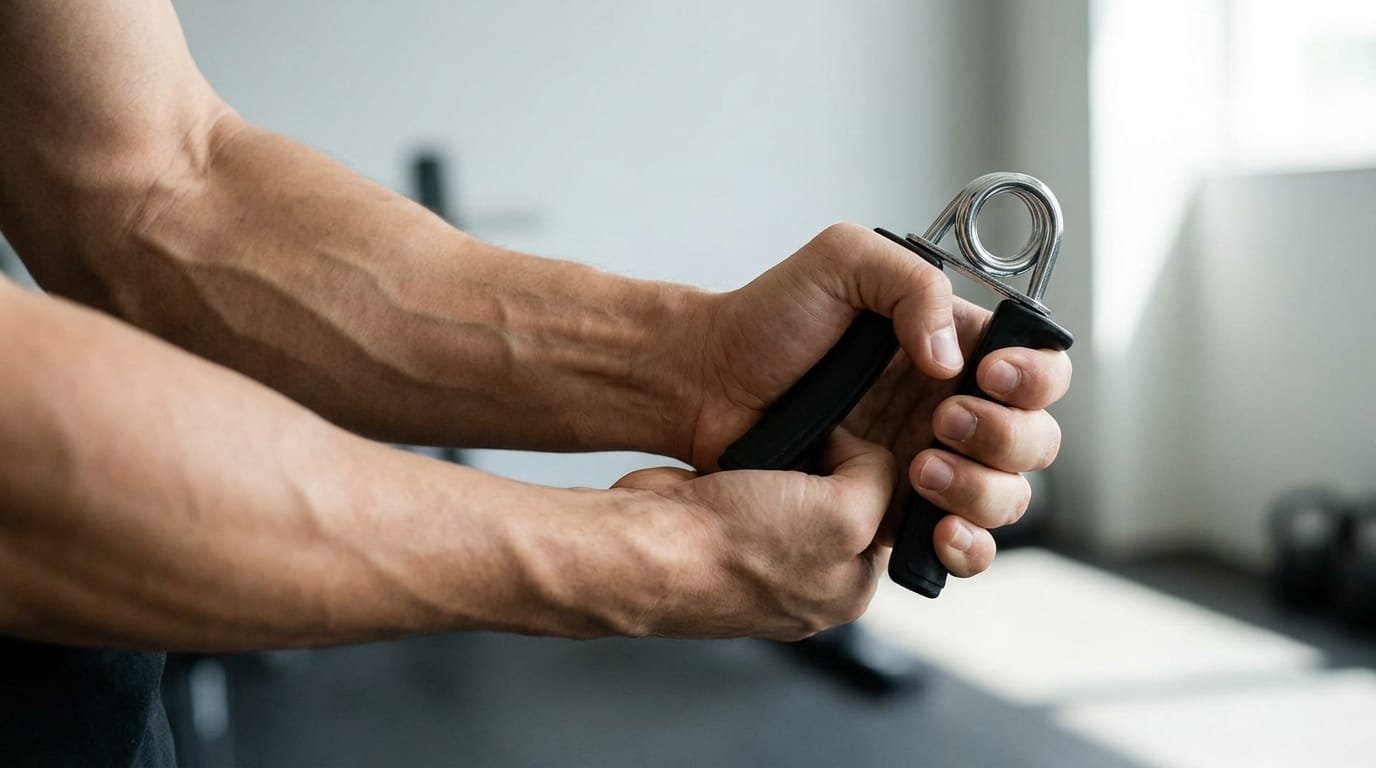
Use an adjustable or series of grippers. Perform full closes or timed holds. Choose a resistance that allows complete range without joint discomfort.
Sets/Reps: 2–4 sets of 6–12 closes or 10–30 second holds per hand.
Progression: higher resistance, more reps, or longer holds.
2. Dead Hangs and Active Hangs (Support Grip)
Hang from a pull-up bar or sturdy overhead bar. Begin with short durations and build time. Active hangs (slight scapular depression) add shoulder benefit.
Sets: 3 × 10–45+ seconds.
Regression: keep feet lightly supported if full hangs are too intense.
3. Farmer Carries or Suitcase Carries
Walk while holding dumbbells, kettlebells, or loaded household objects at the sides. Keep posture tall and grip locked.
Duration: 20–60 seconds per set.
This builds real-world holding endurance.
4. Pinch Holds
Pinch smooth weight plates, heavy books, or blocks between the fingers and thumb. Hold for time.
Sets: 3 × 15–40 seconds.
Excellent for thumb and pinch strength used in many daily tasks.
5. Finger Extension with Rubber Band or Therapy Putty
Place a light band around the outside of the fingers and open the hand against resistance, or use putty for extension and spreading movements.
Sets/Reps: 2–3 × 12–20.
Essential for muscular balance and often recommended in arthritis-friendly programmes.
6. Wrist Flexion and Extension
Light dumbbell or band exercises for the wrist. Controlled tempo, full comfortable range.
Supports wrist stability during gripping tasks.
7. Towel Grip or Thick-Handle Work
Drape a towel over a bar for hangs or rows, or use thicker handles. Increases demand on the entire hand.
8. Soft Ball or Putty Squeezes
Higher-repetition, lower-load work suitable for many people with joint sensitivity. Focus on smooth, controlled contractions.
Comprehensive progressive methods and minimal-equipment options are detailed in How to Build Stronger Grip and Forearms with Minimal Equipment.
Sample Training Programmes
General Strength & Function Programme (2–4 times per week)
- Hand gripper – 3 sets of 8–12 per hand
- Dead hang – 3 sets of 20–40 seconds
- Farmer carry – 3 sets of 30–45 seconds
- Pinch holds – 2–3 sets of 20–30 seconds
- Band finger extensions – 2 sets of 15–20
Arthritis-Friendly / Lower-Load Programme
- Soft ball or putty squeezes – 2–3 sets of 10–15
- Light band finger extensions – 2–3 sets of 12–15
- Supported or very light wrist flexion/extension – 2 sets of 10–12
- Short, comfortable hangs or modified carries if tolerated
- Emphasis on full pain-free range and smooth control
Rest as needed. Stop immediately if sharp joint pain occurs. Mild muscle fatigue is acceptable; joint irritation is not.
Step-by-Step Implementation Guide
- Obtain medical or hand-therapy clearance if you have diagnosed arthritis, significant pain, swelling, or recent injury.
- Begin with the lowest effective resistance and highest control.
- Train 2–4 times per week, allowing recovery between harder sessions.
- Always balance flexion/holding work with finger and wrist extension exercises.
- Progress only when current levels feel comfortable — increase time, resistance, or difficulty gradually.
- Combine exercise with joint-protection habits (larger handles, lever tools, activity pacing, alternating hands).
- Track functional outcomes (ease of opening jars, carry duration, reduced fatigue during daily tasks).
- Maintain overall upper-body balance, including rear-delt and upper-back work.
- Support adaptation with adequate protein and sleep.
- Reassess every 4–6 weeks and adjust volume or intensity according to response.
Integration with Broader Training and Recovery
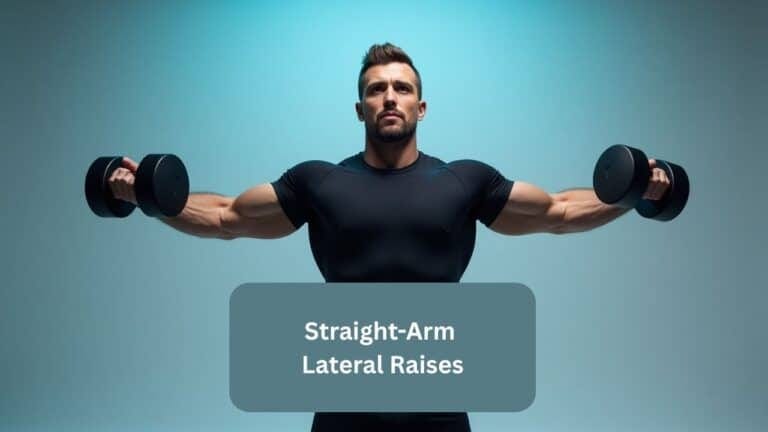
Stronger grip improves performance in pull-ups, rows, and kettlebell exercises (kettlebell sizing guide). Maintain healthy shoulder mechanics during all raising and pressing movements by applying the principles in safe lateral-raise technique and the shoulder health routine to pair with lateral raises.
Core stability developed through hanging and carrying transfers to better overall control; progressions toward an ab roller are complementary. For band-based extension and mobility work, see Resistance Bands Buying Guide: Loop vs. Tube vs. Fabric – Which Wins?. Low-impact conditioning options are discussed in manual treadmill guidance. A budget massage gun can assist with residual forearm and hand tension after training.
Joint-Protection Strategies That Complement Training
- Choose tools and utensils with larger, padded, or contoured handles to reduce peak joint pressure.
- Use lever-style openers for jars and bottles.
- Avoid prolonged static gripping when possible; take micro-breaks.
- Alternate hands during repetitive tasks.
- Consider professional advice on compression gloves or splints for specific activities.
- Apply gentle heat before exercise and follow any cool-down recommendations provided by a therapist.
- Pace demanding manual activities across the day rather than concentrating them.
Frequently Asked Questions
Can grip training reverse arthritis?
No. Exercise cannot reverse structural changes in the joint. It can help maintain the muscular support around the joint, improve function, and reduce symptoms for many people when performed appropriately.
Is grip training safe if I have hand osteoarthritis?
Frequently yes, when intensity is kept low-to-moderate, movements stay within a pain-free range, and professional guidance is followed. Start conservatively and monitor the response closely.
How soon will everyday tasks feel easier?
Functional improvements such as easier jar opening or reduced carry fatigue often become noticeable within 3–8 weeks of consistent training, depending on baseline strength and adherence.
What equipment is truly necessary?
A progressive hand gripper, access to a sturdy overhead bar for hangs, household objects for carries and pinches, and a light band or therapy putty for extensions cover the majority of needs.
Should I push through joint pain?
No. Distinguish clearly between muscular fatigue and joint pain. Any sharp, increasing, or joint-specific pain is a signal to stop or regress the exercise.
How does specific grip training compare with general hand exercises?
Both are valuable. Loaded grip work builds measurable strength and endurance; broader mobility and putty exercises support range of motion and joint comfort. A combined approach is usually optimal.
Can stronger grip help with rheumatoid arthritis or other inflammatory conditions?
Improved muscular support is generally beneficial, but programmes must be individualised and coordinated with medical management. Professional supervision is recommended.
How often should I train grip?
2–4 times per week works well for most people. Higher frequency with lower per-session volume is also effective provided recovery remains adequate.
Final Recommendation
Grip strength training delivers clear benefits for everyday tasks and can serve as a supportive element in the management of hand function for people with arthritis when applied thoughtfully. Focus on progressive crush, support, and pinch exercises balanced with regular finger and wrist extension work. Use simple, accessible tools, train 2–4 times per week within comfortable limits, and combine exercise with proven joint-protection strategies.
Seek guidance from a doctor or hand therapist before beginning if you have diagnosed arthritis or significant hand symptoms. When implemented with patience and consistency, grip training enhances daily independence, supports hand strength, and contributes to better overall upper-body function. Start with the lower-intensity options, prioritise control, and progress gradually for sustainable, real-world results