Best Cable Machine Attachments for a Versatile Home Setup
Quick Answer The most versatile home cable setup starts with five core attachments: a lat pulldown bar, a tricep rope, a pair of single D-handles (or stirrup handles), a double-D or V-bar for rows, and an ankle strap. These cover the majority of upper- and lower-body movements. Add a straight or EZ bar and specialized rotating handles as budget and training goals expand. Prioritize solid construction, smooth swivels, comfortable grips, and universal carabiner compatibility. Quality multi-piece sets offer the fastest path to full functionality for most home gyms.
Why Attachments Determine How Useful Your Cable Machine Really Is
A cable machine or functional trainer is only as versatile as the handles and bars you attach to it. The same pulley system can train lats, chest, shoulders, arms, core, glutes, and legs simply by changing the attachment. Without the right pieces, you are limited to a handful of basic movements and leave significant training potential unused.
In a home gym, space and budget constraints make smart selection especially important. You do not need every specialty handle on the market. A focused collection of high-utility attachments unlocks progressive overload, joint-friendly angles, and exercise variety that complements free weights such as adjustable dumbbells, a weight bench, or an adjustable kettlebell.
Essential Attachments Every Home Setup Should Own
1. Lat Pulldown Bar A long (typically 48-inch) slightly cambered or straight bar with multiple grip positions. Primary uses: wide-grip and close-grip lat pulldowns, straight-arm pulldowns, and some row variations. This is usually the highest-frequency attachment for back development.
2. Tricep Rope Braided rope with rubber or hard end stops. Extremely versatile: tricep pushdowns, overhead extensions, face pulls, hammer curls, and cable crunches. The independent ends allow natural wrist rotation and a strong peak contraction.
3. Single D-Handles (Stirrup Handles) Individual handles that clip to one or both cables. Ideal for unilateral work, chest flyes, single-arm rows, lateral raises, and curls. A pair gives maximum flexibility for bilateral or alternating movements.
4. Double-D or V-Bar / Triangle Handle Close-grip neutral attachment for seated rows, close-grip pulldowns, and some pressdowns. Provides a strong, locked-in pulling path that many lifters prefer for mid-back thickness.
5. Ankle Strap Padded cuff with D-ring. Unlocks lower-body isolation: glute kickbacks, standing leg curls, hip abduction/adduction, and cable hip flexor work. Essential for balanced lower-body training when free-weight options are limited.
High-Value Add-Ons
- Straight or EZ-curl bar for heavier pushdowns and curls
- Rotating or multi-grip handles for reduced joint stress on presses and flyes
- Longer or dual ropes for more advanced face-pull and extension variations
- Ab crunch strap or harness for weighted core work
Comparison of Core Attachment Types
| Attachment | Primary Muscles | Key Exercises | Versatility | Priority Level |
|---|---|---|---|---|
| Lat Pulldown Bar | Lats, upper back | Pulldowns, straight-arm pulldowns | High | Essential |
| Tricep Rope | Triceps, rear delts, core | Pushdowns, face pulls, extensions | Very High | Essential |
| Single D-Handles | Almost everything | Flyes, rows, raises, curls | Highest | Essential |
| Double-D / V-Bar | Mid-back, lats | Seated rows, close-grip pulldowns | High | High |
| Ankle Strap | Glutes, hamstrings, hips | Kickbacks, leg curls, abductions | High | High |
| Straight / EZ Bar | Triceps, biceps | Pushdowns, curls | Medium | Medium |
Step-by-Step Guide to Building Your Attachment Collection
- Confirm your cable machine uses standard carabiners or universal clips.
- Start with the five essentials listed above if you are building from zero.
- Prioritize comfort and swivel quality—cheap fixed attachments often create unnecessary joint stress.
- Choose knurled or textured grips for heavy work and rubber/foam for higher-rep or specialty movements.
- Consider a multi-piece set for the best initial value and storage convenience.
- Add specialty pieces (rotating handles, MAG-style grips, longer ropes) only after you identify specific gaps in your training.
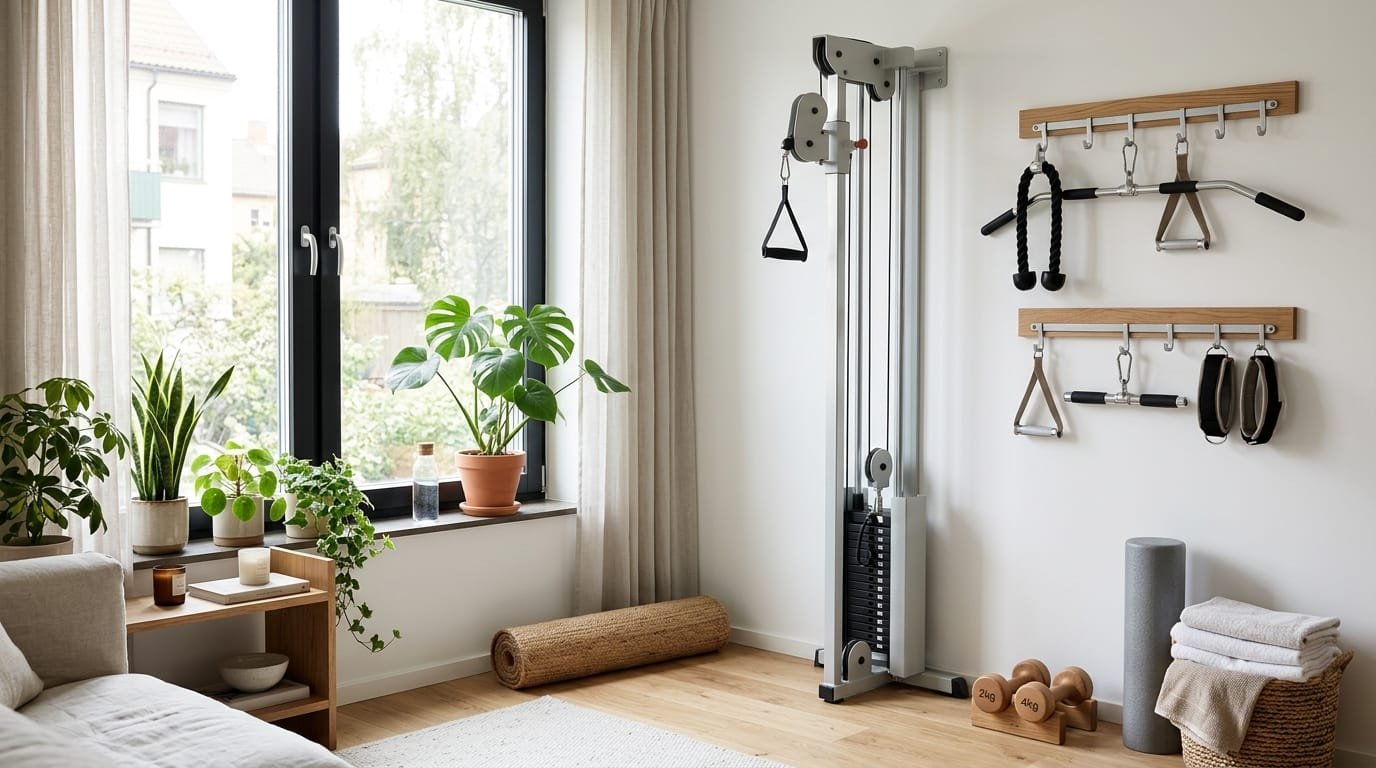
- Store attachments on a dedicated rack, hooks, or wall-mounted organizer to keep the area tidy and accessible.
- Test each new attachment with light weight first to confirm smooth movement and secure connection.
How Attachments Expand Training Options
With the core set you can perform:
- Vertical and horizontal pulling for complete back development
- Unilateral and bilateral pressing and flye variations
- Isolation work for triceps, biceps, and rear delts
- Direct glute and hip work that complements kettlebell training
- Core movements that improve stability for free-weight lifts
These options fill gaps that pure free-weight training sometimes leaves, especially for higher-rep hypertrophy work and joint-friendly angles. Strong grip endurance improves control of every attachment, while proper scapular mechanics (the same principles discussed in our lateral raise form articles) keep shoulders healthy during high-volume cable work.
Material and Build Quality Considerations
- Steel construction with solid welds or forged components lasts longer than thin stamped metal.
- Smooth 360-degree swivels reduce cable twist and wrist strain.
- Rubber or hard plastic end stops on ropes prevent fraying and improve hand comfort.
- Padded ankle straps with secure Velcro or buckles stay in place during dynamic movements.
- Weight ratings should exceed the heaviest loads you plan to use (most quality pieces handle 500+ lb).
Budget sets can be excellent starting points, but inspect reviews for long-term durability of grips and connection points. Premium individual pieces often feel noticeably better under heavy or high-volume use.
Storage and Organization Tips
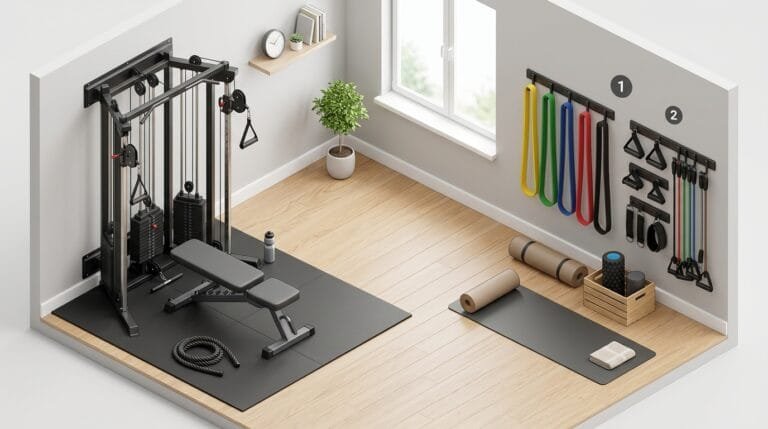
Keep the most-used attachments (lat bar, rope, D-handles) closest to the machine. Wall-mounted racks, pegboards, or simple hooks prevent clutter. Label or group by movement pattern if your collection grows large. Proper storage protects both the attachments and the floor surface underneath your setup.
Frequently Asked Questions
What are the most essential cable machine attachments? Lat pulldown bar, tricep rope, pair of single D-handles, double-D or V-bar, and ankle strap cover the large majority of useful exercises.
Can I use the same attachments on any cable machine? Most modern home machines and functional trainers use standard carabiner connections. Always verify compatibility before purchasing.
Are multi-piece sets worth it? Yes for beginners or anyone starting from zero. They deliver broad utility at a lower cost per piece and simplify the initial decision process.
Do I need rotating handles? They are not mandatory but reduce wrist and elbow stress on many pressing and flye movements. Worth adding once the basics are covered.
How important is the ankle strap? Very useful for balanced lower-body training, especially if you lack a full selection of free-weight isolation options for glutes and hamstrings.
Should I buy the most expensive attachments? Not necessarily. Focus on solid construction, comfortable grips, and smooth function. Many mid-range options perform excellently for home use.
Final Recommendation
Build around the five core attachments first. A quality lat bar, tricep rope, single D-handles, close-grip row handle, and ankle strap transform a basic cable machine into a highly versatile training station. Expand with specialty grips and bars only after consistent use reveals specific needs.
Pair the cable work with free-weight compounds and the rest of your home equipment for complete development. Consistent progressive overload, good form, and smart attachment selection produce better results than an endless collection of rarely used pieces.
Assess your current machine and training priorities, acquire the essentials, organize them for easy access, and begin exploring the full range of movements your cable system can deliver. A well-chosen set of attachments is one of the highest-return upgrades available in any home gym.