How Much Creatine Actually Matters for Home Lifters Using Light Equipment
Quick Answer
Creatine monohydrate still matters for home lifters using light equipment because it increases intramuscular phosphocreatine stores, supporting higher training quality, better recovery between sets, and improved work capacity even when absolute loads are modest. A daily dose of 3–5 g is sufficient for most people. Benefits appear in strength progression, repetition performance, and lean mass over time, regardless of whether you train with heavy barbells or lighter dumbbells, bands, and bodyweight. Loading phases are optional; consistency of daily intake is what drives results.
Why Creatine Remains Relevant With Light Home Equipment
Many home trainees assume creatine only helps people lifting near-maximal loads in commercial gyms. This is incorrect. Creatine’s primary role is to rapidly regenerate ATP during high-intensity efforts lasting roughly 1–10 seconds—exactly the energy system used in strength training sets, explosive bodyweight movements, and dense circuits. When phosphocreatine stores are elevated, you can often complete more quality repetitions, recover slightly faster between sets, and maintain higher power output across a session. These advantages compound over weeks and months, producing better progressive overload even when the external load is limited to adjustable dumbbells, kettlebells, bands, or bodyweight progressions.
Core Principles of Creatine Use for Home Lifters
- Mechanism is load-independent – Creatine works at the cellular energy level, not by increasing the weight on the bar.
- Daily consistency beats loading theatrics – 3–5 g every day is effective.
- Benefits accumulate over weeks – Noticeable changes in performance often appear after 2–4 weeks of regular use.
- Works with any progressive method – Tempo, pauses, unilateral work, density, and load progression all benefit.
- Safety profile is excellent for healthy adults – Extensive research supports long-term use at standard doses.
- Non-responders exist but are a minority – Most people experience measurable benefits.
Creatine Benefits for Different Home Training Styles
| Training Style | How Creatine Helps | Expected Practical Outcome | Timeframe for Noticeable Effect |
|---|---|---|---|
| Light-moderate dumbbells / kettlebells | Better rep performance & inter-set recovery | More quality volume per session | 2–4 weeks |
| Bodyweight progressions | Improved power & density tolerance | Easier progression to harder variations | 2–5 weeks |
| Resistance bands | Higher effort sustainability in peak tension ranges | Better control and volume | 2–4 weeks |
| Density / circuit training | Faster recovery between movements | Higher total work in fixed time | 2–3 weeks |
| Unilateral work | Maintained output on each limb | Reduced drop-off on weaker side | 2–4 weeks |
| Mixed strength + conditioning | Better repeated high-intensity efforts | Improved work capacity | 2–4 weeks |
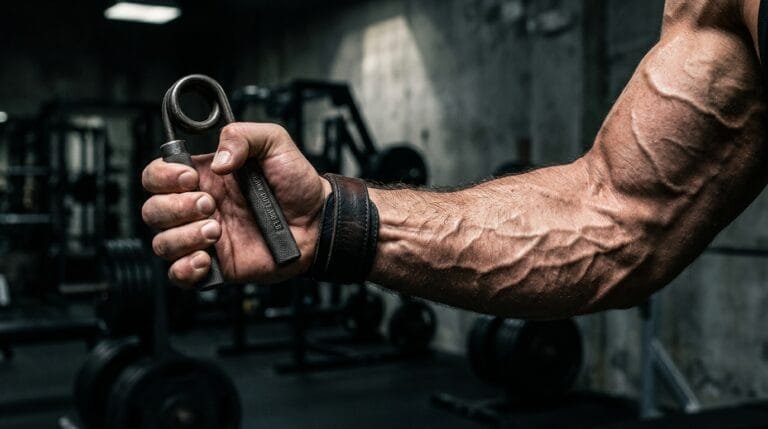
Shoulder-friendly upper-body training and grip work also benefit from the improved training quality creatine supports (Bent Arms vs. Straight Arms in Lateral Raises, The Hidden Mistake in Lateral Raises, 3 Lateral Raise Modifications, and Do Hand Grippers Really Work?).
Step-by-Step Guide to Using Creatine With Light Home Equipment
- Choose creatine monohydrate
It is the most researched, effective, and cost-efficient form. - Select a daily dose of 3–5 g
5 g is the standard evidence-based dose for most adults. Smaller individuals may do well with 3 g. - Decide on loading or non-loading
Loading (20 g/day split into 4 doses for 5–7 days) saturates stores faster. Non-loading (3–5 g daily) reaches the same saturation in 3–4 weeks and is simpler. - Take it every day
Timing is flexible—pre-workout, post-workout, or with any meal. Consistency matters more than precise timing. - Mix with water or any beverage
Creatine monohydrate dissolves adequately in warm or room-temperature liquid. - Maintain normal hydration
Creatine draws water into muscle cells; adequate daily fluid intake supports comfort and performance. - Track training performance
Log repetitions, loads, and how dense sessions feel over the first 4 weeks. - Combine with progressive overload
Creatine amplifies the results of good programming; it does not replace it. - Continue through deloads and easier weeks
Muscle creatine stores remain elevated with daily intake. - Reassess after 4–6 weeks
Evaluate strength progression, work capacity, and recovery to confirm personal response.
What the Research Shows for Non-Maximal Training
Creatine supplementation reliably increases intramuscular creatine stores by 20–40 % in most people. This elevation improves repeated high-intensity performance, strength gains, and lean mass accretion across a wide range of training statuses and equipment levels. Studies including recreational lifters and those using moderate loads still show positive effects on strength and body composition. The magnitude of benefit is often similar to that seen in heavier-training populations because the underlying energy-system limitation is the same.
Practical Expectations for Home Lifters
Strength and Repetition Performance
Many users report the ability to complete 1–3 additional quality repetitions on key sets or to maintain better performance across later sets in a session.
Work Capacity and Density
Shorter rest periods or higher round counts in circuits become more manageable.
Body Composition
Creatine often produces a rapid 1–2 kg increase in body weight due to intracellular water. This is lean mass, not fat, and typically stabilises. Over months, greater training quality can support additional muscle gain.
Recovery Between Sessions
Some lifters notice improved readiness for the next training day, although this effect is more variable.
Addressing Common Concerns of Home Lifters
“I only lift light weights—will I still benefit?”
Yes. The energy-system benefit applies whenever you train with high intensity relative to your current capacity, regardless of the absolute load.
“Will creatine make me look bloated?”
The initial water weight is stored inside muscle cells, often producing a fuller appearance rather than subcutaneous bloating. Most people do not experience a soft or puffy look.
“Do I need to cycle creatine?”
No. Continuous daily use is effective and well-supported by research.
“Is micronized or buffered creatine better?”
Standard creatine monohydrate remains the gold standard. Other forms have not consistently outperformed it in high-quality studies.
Sample Daily Integration for Home Lifters
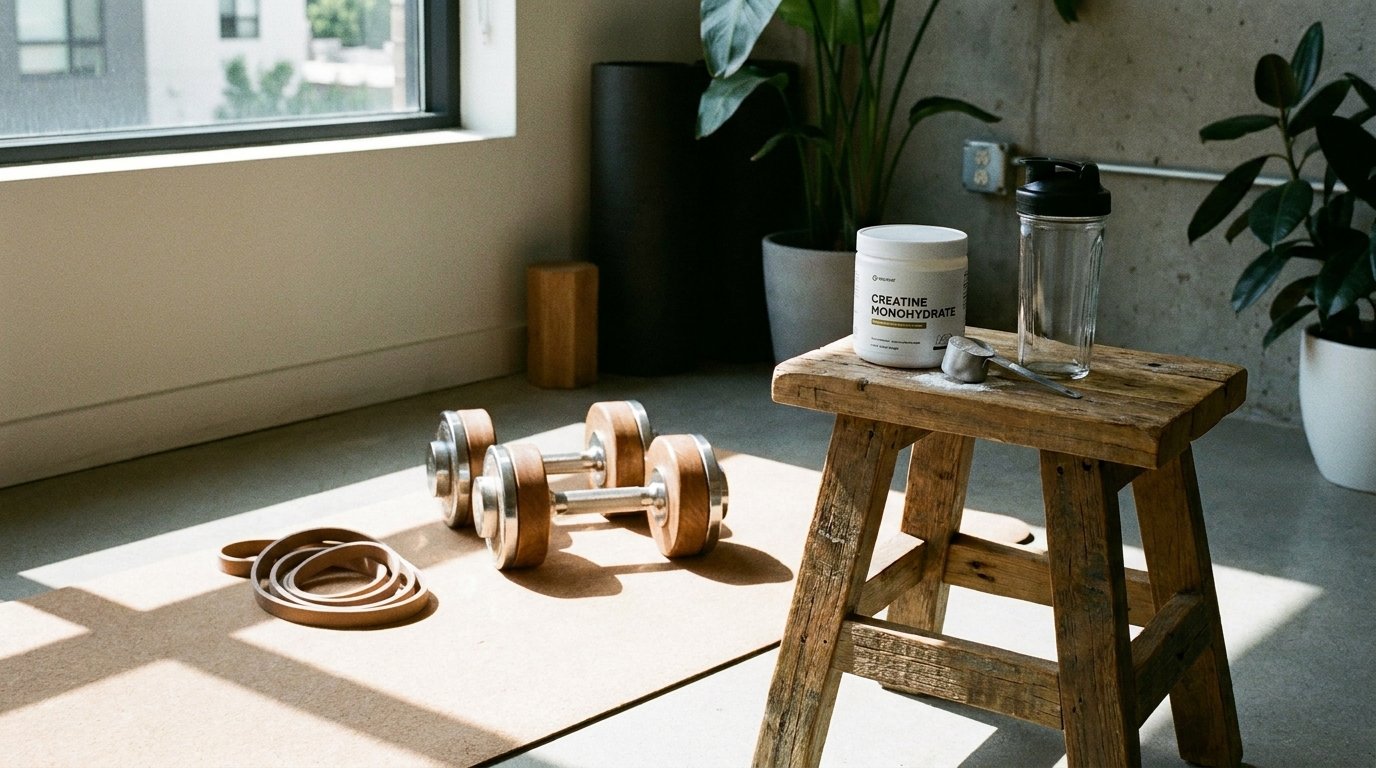
- Morning or post-workout: 5 g creatine monohydrate mixed in water or a protein shake
- Continue normal protein intake (1.6–2.2 g/kg)
- Maintain progressive training with the equipment you have
- Drink water regularly throughout the day
No special diet is required beyond overall solid nutrition.
Who May Experience Smaller Benefits
- Individuals with already high dietary creatine intake (frequent red-meat consumers)
- True non-responders (estimated 10–30 % of people, often those with naturally high baseline stores)
- Lifters whose training intensity is consistently very low
Even in these cases, creatine is inexpensive and low-risk, so a 4–6 week trial remains reasonable.
Safety and Side Effects
Creatine monohydrate is one of the most studied supplements in sports nutrition. At 3–5 g daily, it is considered safe for healthy adults. Occasional digestive discomfort can occur with large single doses; splitting or taking with food usually resolves it. People with pre-existing kidney disease should consult a physician before use. For healthy individuals, routine bloodwork does not show harmful changes attributable to standard-dose creatine.
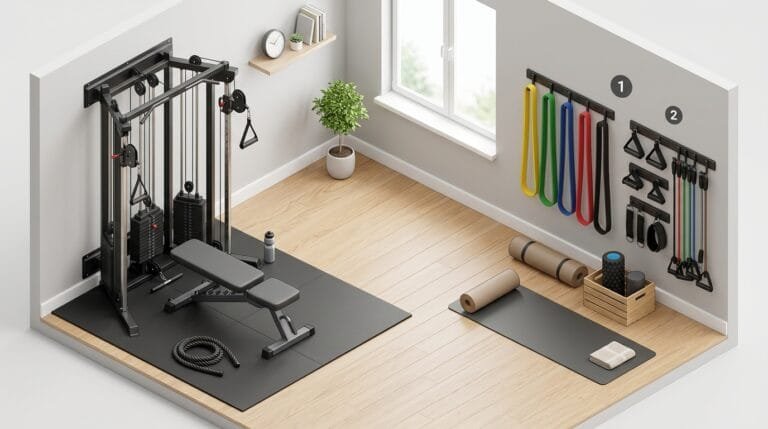
Strength training produces the stimulus; creatine helps you express and recover from that stimulus more effectively (strength training guidance). Practical home-gym approaches emphasise simple, evidence-based tools that improve results with existing equipment (home gym equipment prioritisation and budget home gym principles).
Frequently Asked Questions
How long does it take for creatine to work with light equipment?
Most people notice performance improvements within 2–4 weeks of daily use. Full saturation occurs around this time with a non-loading protocol.
Do I need a loading phase?
No. Loading reaches saturation faster (5–7 days) but is not required. 3–5 g daily is equally effective over a slightly longer period.
Can I take creatine only on training days?
Daily intake is superior because muscle creatine stores are maintained more consistently.
Will creatine help with bodyweight exercises?
Yes. Improved power output and repeated-effort capacity support progressions in push-ups, rows, squats, and advanced calisthenics variations.
Does caffeine cancel out creatine?
Current evidence does not support a meaningful negative interaction when both are used reasonably. Many people consume both successfully.
Should women take the same dose?
Yes. 3–5 g daily is appropriate. Women respond similarly to men in performance and lean-mass outcomes.
Is creatine useful during a cut or calorie deficit?
Yes. It can help preserve training quality and lean mass while calories are restricted.
What is the best form of creatine for home lifters?
Creatine monohydrate. It is the most researched, effective, and economical option.
Final Recommendation
Creatine monohydrate at 3–5 g daily meaningfully supports progress for home lifters using light equipment by improving training quality, inter-set recovery, and work capacity. The benefits are not reserved for heavy barbell training—they apply whenever you perform progressive, high-intensity efforts with dumbbells, kettlebells, bands, or bodyweight. Consistency of daily intake is more important than timing or loading protocols.
Begin with 5 g of creatine monohydrate each day, take it at any convenient time, maintain your normal progressive training, and evaluate performance and recovery after 3–4 weeks. Combine it with adequate protein and solid programming for the best results. Start today—the low cost and strong evidence make creatine one of the highest-return additions available to home trainees, regardless of how heavy the equipment is.