
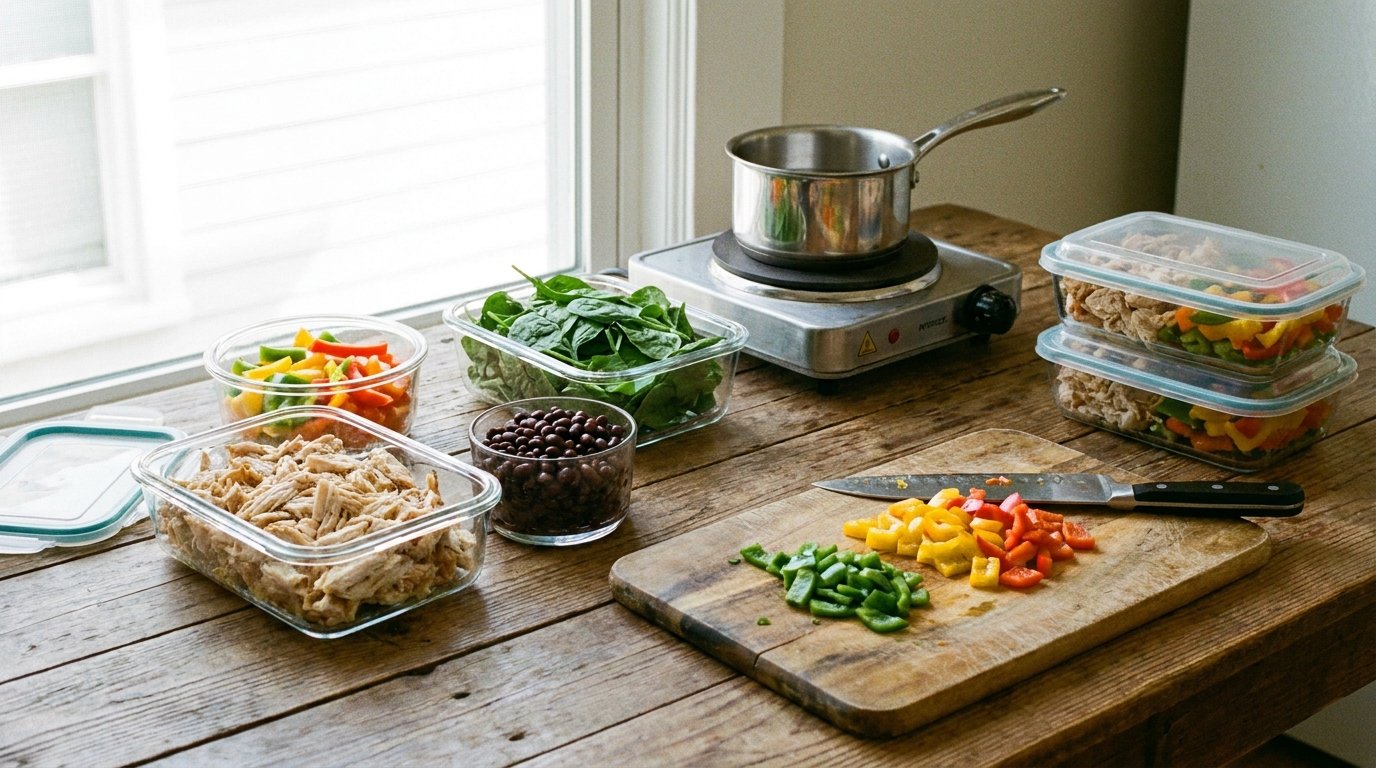
Simple High Protein Meals You Can Prep Without a Full Kitchen Setup
Quick Answer
Simple high protein meals without a full kitchen setup rely on no-cook or minimal-prep foods: Greek yogurt, cottage cheese, canned tuna or salmon, pre-cooked chicken or turkey, hard-boiled eggs, protein powder, ready-to-eat cheeses, deli meats, and shelf-stable options combined with fruit, vegetables, or whole-grain wraps. Aim for 25–40 g of protein per meal using combinations that require only a refrigerator, basic utensils, or a microwave at most. Prepare components in advance when possible and keep a short list of reliable combinations so high protein intake stays consistent even with limited cooking facilities.
Why Limited Kitchen Access Makes Protein Harder
Many home trainees live in apartments with tiny kitchens, shared facilities, dorms, hotel rooms, or offices where full cooking is impractical. Traditional meal-prep advice assumes ovens, stovetops, multiple pans, and significant time. When those resources are missing, protein intake often drops. The solution is a short menu of high-protein foods that need little or no cooking, store well, and combine into satisfying meals or large snacks. Consistency of daily protein matters more than culinary complexity.
Core Principles for No-Full-Kitchen Protein Meals
- Prioritise ready-to-eat or minimally processed protein sources – Reduce dependence on cooking.
- Aim for 25–40 g protein per feeding – Supports muscle protein synthesis effectively.
- Combine protein with simple carbs or fats for satisfaction – Improves adherence.
- Use a refrigerator and basic tools as the maximum requirement – Microwave is optional, not essential.
- Batch what you can – Even limited prep multiplies convenience.
- Keep a rotating short list – Prevents decision fatigue and boredom.
High-Protein Foods That Work Without a Full Kitchen
| Food | Protein (approx. per typical serving) | Prep Needed | Storage | Notes |
|---|---|---|---|---|
| Greek yogurt (plain, 0–2%) | 15–20 g per 170 g | None | Fridge | Versatile base |
| Cottage cheese | 14–28 g per cup | None | Fridge | High volume, low calorie |
| Canned tuna or salmon | 20–25 g per can | Drain only | Shelf + fridge after opening | Excellent convenience |
| Pre-cooked chicken strips or rotisserie | 25–35 g per serving | None or reheat | Fridge | Buy ready-made |
| Hard-boiled eggs | 6 g each | Pre-boil if possible | Fridge | Portable |
| Protein powder | 20–30 g per scoop | Shake with water/milk | Shelf | Fastest option |
| String cheese or cheese portions | 6–8 g each | None | Fridge | Easy add-on |
| Deli turkey or chicken | 15–20 g per 100 g | None | Fridge | Check sodium |
| Jerky or meat sticks | 10–15 g per serving | None | Shelf | Travel-friendly |
| Edamame (shelled, frozen or ready) | 15–18 g per cup | Microwave or thaw | Freezer/fridge | Plant option |
| Skyr or high-protein yogurt | 15–25 g | None | Fridge | Thicker texture |
| Ready-to-drink protein shakes | 20–30 g | None | Shelf or fridge | Zero prep |
Shoulder-friendly training and grip work still benefit from consistent protein to support recovery (Bent Arms vs. Straight Arms in Lateral Raises, The Hidden Mistake in Lateral Raises, 3 Lateral Raise Modifications, and Do Hand Grippers Really Work?).
Step-by-Step System for High-Protein Meals With Limited Kitchen Access
- List the equipment you actually have
Refrigerator only, microwave, electric kettle, or nothing beyond a cooler bag. - Choose 5–7 core protein sources from the table above that fit your storage and preferences.
- Identify 2–3 simple add-ins
Fruit, baby carrots, cherry tomatoes, whole-grain wraps, rice cakes, nuts, or pre-washed salad. - Create 4–6 repeatable meal formulas
Protein base + add-in + optional flavour (hot sauce, mustard, spices, salsa). - Shop once or twice a week for the core items so they are always available.
- Portion or pre-mix when possible
Even 10 minutes of dividing yogurt or opening cans multiplies convenience. - Keep emergency options
Protein powder, jerky, or ready-to-drink shakes for days when fresh food runs out. - Aim for protein at 3–5 eating occasions
Breakfast, lunch, post-training, dinner, and optional snack. - Track for one week
Confirm you are landing near your daily target (typically 1.6–2.2 g per kg body weight). - Rotate flavours and combinations
Prevent boredom without needing new cooking skills.
Ready-to-Use Meal Formulas (No Full Kitchen Required)
Formula 1 – Yogurt Bowl
Greek yogurt or skyr (25–35 g protein) + berries or banana + optional nuts or protein powder stir-in.
Formula 2 – Tuna or Salmon Plate
One can tuna/salmon (20–25 g) + pre-washed vegetables or fruit + optional olive oil or mustard.
Formula 3 – Cottage Cheese Combo
1–1½ cups cottage cheese (25–40 g) + pineapple, tomatoes, or cucumber + black pepper or everything-bagel seasoning.
Formula 4 – Wrap or Rice-Cake Stack
Whole-grain wrap or rice cakes + deli turkey or chicken + cheese + vegetables.
Formula 5 – Shake + Solid
Protein shake (25 g) + string cheese or jerky + fruit.
Formula 6 – Egg and Dairy Plate
2–3 hard-boiled eggs + Greek yogurt or cottage cheese + vegetables.
Formula 7 – Pre-Cooked Chicken Box
Ready-cooked chicken (30 g protein) + microwave rice pouch or fruit + pre-washed greens if available.
These combinations require at most a fork, a container, and a refrigerator. Microwave use is optional for reheating pre-cooked items or steaming frozen edamame.
Sample Daily High-Protein Eating on Limited Kitchen Access
Example Day (approx. 140–160 g protein for a 75–80 kg person)
- Breakfast: Greek yogurt + protein powder + berries (40 g)
- Lunch: Canned tuna + vegetables + rice cakes (35 g)
- Post-training: Ready-to-drink shake or cottage cheese (30 g)
- Dinner: Pre-cooked chicken + side salad or fruit (35 g)
- Optional evening: String cheese or jerky (10–15 g)
Adjust portions to individual needs and preferences.
Shopping and Storage Strategies
- Buy Greek yogurt and cottage cheese in larger tubs and portion as needed.
- Keep several cans of tuna or salmon in the cupboard.
- Choose pre-cooked chicken that lasts 3–4 days in the refrigerator.
- Hard-boil a batch of eggs once if you have brief stove access, or buy pre-boiled.
- Stock protein powder and ready-to-drink options as insurance.
- Use a simple cooler bag if you need to transport meals to an office or shared space.
Common Obstacles and Practical Solutions
| Obstacle | Impact | Solution |
|---|---|---|
| No refrigerator access during the day | Limited fresh options | Rely on shelf-stable: jerky, protein powder, canned fish, ready-to-drink shakes |
| Boredom with the same foods | Reduced adherence | Rotate seasonings, fruits, and combinations from the formulas above |
| Higher sodium in convenience proteins | Preference or health concern | Choose lower-sodium tuna, rinse if possible, balance with fresh produce |
| Cost of ready-to-eat proteins | Budget pressure | Mix canned fish, eggs, yogurt, and protein powder—these remain economical |
| Lack of vegetables | Micronutrient gap | Keep baby carrots, cherry tomatoes, or pre-washed bags when fridge space allows |
| Travel or hotel stays | Complete loss of routine | Pack protein powder, jerky, and tuna packets; buy yogurt or cottage cheese on arrival |
Flavour and Satisfaction Tips Without Cooking
- Mustard, hot sauce, salsa, lemon juice, black pepper, garlic powder, and everything-bagel seasoning add variety with zero cooking.
- Pairing protein with fruit or crunchy vegetables improves texture and satisfaction.
- A small amount of healthy fat (nuts, olive oil, avocado when available) increases fullness.
- Temperature contrast (cold yogurt with room-temperature fruit) can make simple meals more appealing.
Strength training creates the demand for adequate protein to support recovery and adaptation (strength training guidance). Practical home-gym approaches emphasise sustainable habits that work with real-life constraints, including limited kitchens (home gym equipment prioritisation and budget home gym principles).
Frequently Asked Questions
How much protein can I realistically get without cooking?
Most people can comfortably reach 120–180 g per day using yogurt, cottage cheese, canned fish, pre-cooked meats, eggs, and protein powder.
Do I need a microwave?
No. The majority of the listed options require no heating. A microwave only expands options for reheating pre-cooked items or steaming frozen vegetables.
Are canned foods safe to eat frequently?
Yes, when you choose reputable brands. Vary sources and include fresh produce when possible for overall diet quality.
What if I am plant-based?
Focus on Greek-style high-protein plant yogurts (if available), edamame, protein powder, cottage-cheese alternatives, and combinations of legumes with grains when you have minimal prep ability. Total daily intake may need to be slightly higher.
How long do these meals stay safe in a refrigerator?
Most prepared combinations last 2–4 days. Keep proteins cold and use common sense with perishable items.
Can these meals support muscle gain?
Yes, provided total daily protein and calories are appropriate and progressive strength training is in place.
What is the single most useful item to keep stocked?
Plain Greek yogurt or a versatile protein powder—both combine with almost anything and require zero cooking.
How do I avoid getting tired of the same foods?
Rotate between the core formulas, change fruits and seasonings, and alternate animal and dairy sources across the week.
Final Recommendation
High-protein meals without a full kitchen setup are built from a short list of ready-to-eat sources—Greek yogurt, cottage cheese, canned fish, pre-cooked chicken, eggs, protein powder, and simple add-ins—combined into repeatable formulas that deliver 25–40 g of protein each. Shop for these items regularly, keep emergency shelf-stable options available, and distribute protein across 3–5 feedings so daily targets remain achievable.
Choose five core protein foods today, write down three meal formulas you will actually eat, and stock your refrigerator or cupboard accordingly. Consistency of total protein intake matters far more than cooking skill or elaborate recipes. Start with the next meal—simple, high-protein combinations that require almost no kitchen make progressive home training sustainable even in the most limited environments.