Best Ways to Measure Progress When the Scale Isn’t Moving
Quick Answer
When the scale isn’t moving, measure progress through strength logs, body measurements, progress photos, how clothes fit, performance metrics (reps, load, density), recovery markers, and subjective energy or mood. These indicators often improve weeks or months before scale weight changes, especially during strength-focused home training. Track two or three non-scale metrics consistently and review them every two to four weeks for a clearer picture of actual adaptation.
Why the Scale Often Lags Behind Real Progress
Scale weight reflects a combination of muscle, fat, water, glycogen, and digestive contents. Strength training frequently increases muscle mass and intramuscular water while reducing fat. The net effect on the scale can be neutral or even slightly upward for extended periods even as body composition and capability improve. Relying solely on scale weight therefore creates false plateaus and unnecessary frustration. Broader measurement methods capture the adaptations that actually matter for health, function, and appearance.
Core Principles for Non-Scale Progress Tracking
- Multiple data points beat a single number – Strength, measurements, and photos together tell a more accurate story.
- Consistency of measurement conditions – Same time of day, lighting, and methods improve reliability.
- Trend over single readings – Weekly or bi-weekly averages matter more than any one day.
- Process metrics remain primary – Sessions completed and progressive overload applied still predict long-term results.
- Subjective markers have value – Energy, sleep quality, and how clothes fit provide early signals.
- Review on a schedule – Looking at data every two to four weeks prevents daily emotional reactions.
High-Value Progress Metrics When Scale Weight Is Stable
| Metric | What It Shows | How to Track | Review Frequency |
|---|---|---|---|
| Strength log | Neural and muscular adaptation | Load × reps on key lifts | Every session; trend review every 2–4 weeks |
| Body measurements | Regional composition changes | Waist, hips, chest, thighs, arms with tape | Every 2–4 weeks |
| Progress photos | Visual composition and posture | Consistent lighting, poses, time of day | Every 2–4 weeks |
| Clothing fit | Practical real-world change | How specific garments feel | Ongoing; note monthly |
| Performance density | Work capacity | Rounds completed or work done in fixed time | Every 1–2 weeks |
| Recovery markers | Training tolerance | Sleep quality, resting energy, joint feeling | Daily/weekly qualitative notes |
| Movement quality | Skill and control | Video of key lifts | Every 2–4 weeks |
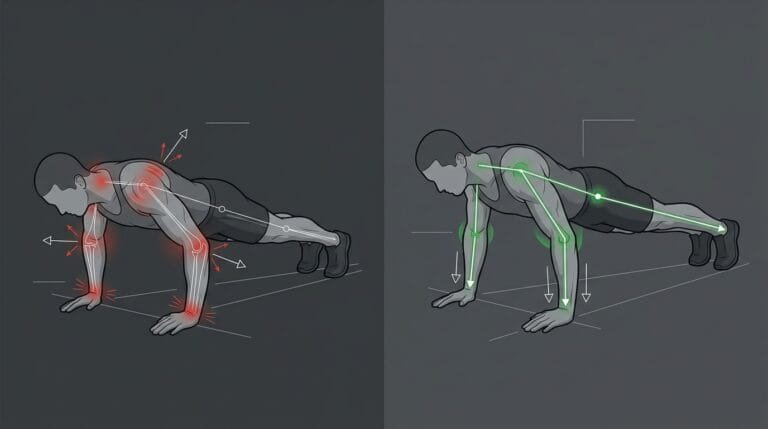
Shoulder-friendly technique supports continued upper-body strength progress that may not appear on the scale (Bent Arms vs. Straight Arms in Lateral Raises, The Hidden Mistake in Lateral Raises, and 3 Lateral Raise Modifications). Grip strength improvements are another clear non-scale marker (Do Hand Grippers Really Work?).
Step-by-Step System for Tracking Progress Beyond the Scale
- Select 2–4 key metrics
Choose a mix of objective (strength, measurements) and visual or practical (photos, clothing fit). - Standardise measurement conditions
Weigh and measure at the same time of day, ideally in the morning after using the bathroom. Take photos in consistent lighting and poses. - Log strength performance every session
Record exercises, loads, sets, and reps. Note when progressive overload is applied. - Take measurements and photos on a fixed schedule
Every two or four weeks is sufficient for most people. - Keep a simple qualitative journal
One or two sentences on energy, sleep, and how clothes feel. - Review trends, not individual data points
Compare the current two-to-four-week block with the previous one. - Maintain process metrics
Continue tracking sessions completed and adherence to progressive overload. - Adjust expectations according to training phase
Strength-focused or muscle-building phases often show slower scale change. - Use the data to make decisions
If strength, measurements, and photos are improving, the program is working even if scale weight is stable. - Reassess the tracking system every few months
Drop metrics that create friction and keep those that provide clear signal.
Detailed Look at Each Major Metric
Strength Logs
This is often the most motivating and objective marker for home trainees. When key lifts (goblet squat, Romanian deadlift, push-up or press variations, rows) show higher loads or more repetitions over time, adaptation is occurring. Strength gains frequently precede visible composition change.
Body Measurements
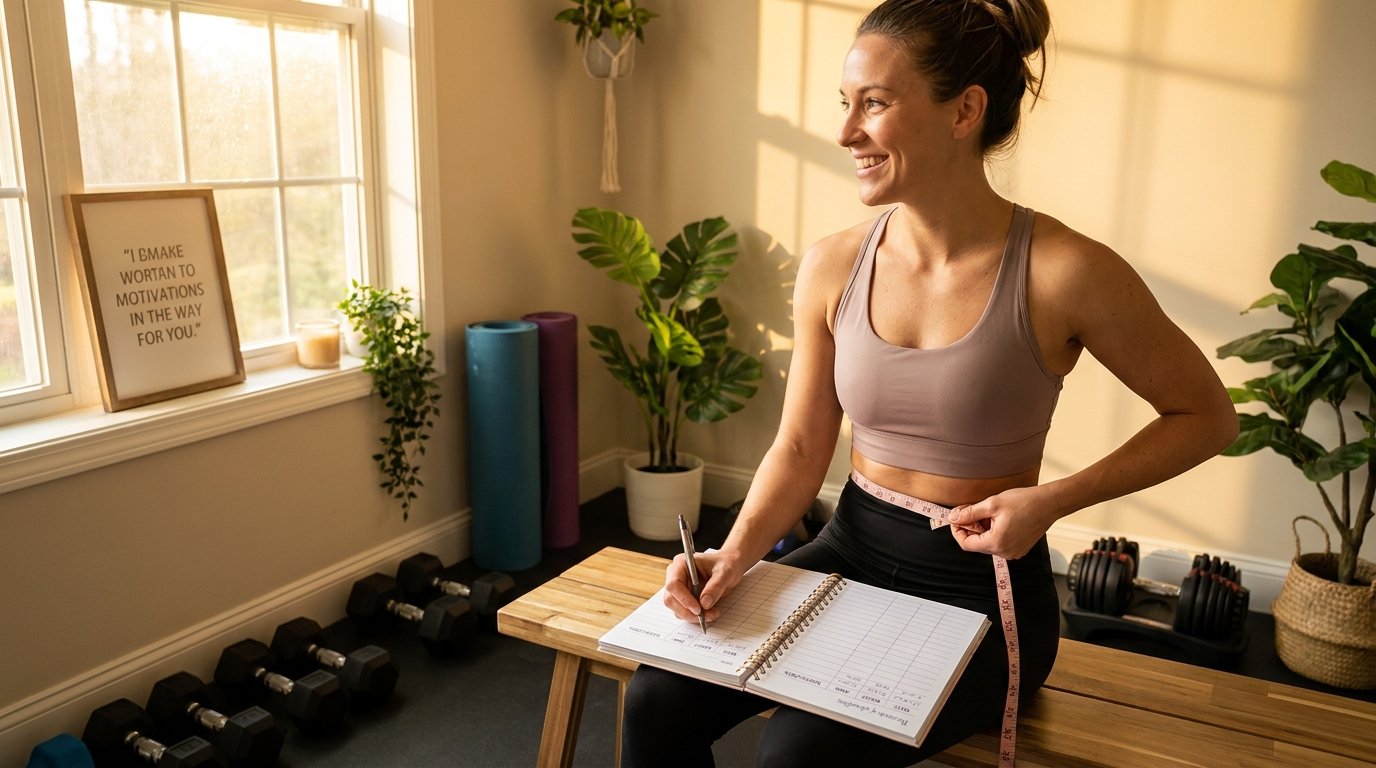
A flexible tape measure used on waist, hips, chest, upper arms, and thighs can reveal fat loss or muscle gain that the scale misses. Waist circumference is particularly useful for tracking abdominal changes. Measure under consistent conditions and average two or three readings.
Progress Photos
Photos taken from front, side, and back under the same lighting and in the same poses provide visual evidence of composition and posture changes. Many people notice differences in photos weeks before the scale moves.
Clothing Fit
How a specific pair of trousers, shirt, or belt feels is a practical, real-world indicator. Looser waistbands or more room in the shoulders often signal positive change even when weight is stable.
Performance Density and Work Capacity
The ability to complete more rounds of a circuit in the same time, or the same work with shorter rest, indicates improved conditioning and fatigue resistance.
Recovery and Subjective Markers
Better sleep, higher daily energy, improved mood, and reduced joint irritation are meaningful signs that training stress is being managed productively.
Interpreting Mixed Signals
It is common for some metrics to improve while others stay flat temporarily. Examples:
- Strength rising while scale weight is stable → likely favourable composition change
- Measurements improving while photos look similar → early regional change
- Photos improving while scale weight rises slightly → possible muscle gain
When most non-scale metrics trend positively, the program is working. Persistent lack of progress across strength, measurements, and photos for 6–8 weeks may indicate the need for programming or recovery adjustments.
Common Mistakes When the Scale Is Stuck
| Mistake | Result | Better Approach |
|---|---|---|
| Checking scale weight daily | Emotional reactions to normal fluctuations | Weigh weekly or less; focus on trends |
| Ignoring strength progress | Unnecessary program changes | Log and review key lifts |
| Inconsistent measurement conditions | Noisy data | Standardise time, lighting, and methods |
| Tracking too many metrics | Overwhelm and abandonment | Limit to 2–4 high-value markers |
| Expecting linear scale change during strength phases | Frustration | Adjust expectations to the training goal |
| Abandoning tracking when scale is stable | Loss of motivation | Lean more heavily on non-scale metrics |
Integrating Non-Scale Tracking into Home Training
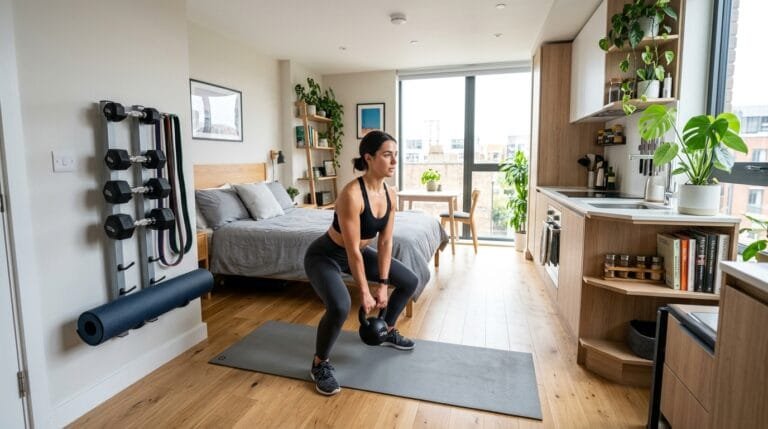
Make strength logging automatic at the end of every session. Schedule measurement and photo days on the calendar (for example, the first Sunday of each month). Keep the qualitative journal to one or two lines so it remains sustainable. When the scale is stable, increase attention to these other markers rather than reducing it.
Strength training produces measurable improvements in muscle, strength, and function that often appear before scale weight changes (strength training guidance). Practical home-gym approaches emphasise tracking methods that stay useful under real conditions (home gym equipment prioritisation and budget home gym principles).
Frequently Asked Questions
How long can the scale stay stable while progress continues?
It is common for scale weight to remain relatively stable for 4–12 weeks during effective strength training while strength, measurements, and appearance improve.
Which single non-scale metric is most useful?
Strength performance on key lifts is often the most objective and motivating for home trainees. Combining it with waist measurement or photos provides a more complete picture.
How often should I take progress photos?
Every two to four weeks under consistent conditions is sufficient. More frequent photos rarely add useful information and can increase anxiety.
What if strength is also stuck?
Review recovery (sleep, protein, stress), technique, and whether progressive overload is actually being applied. A short deload followed by renewed progression often helps.
Should I stop weighing myself completely?
Not necessarily. Weekly or bi-weekly weighing under standardised conditions can still provide useful trend data when interpreted alongside other metrics.
Can measurements improve while the scale goes up?
Yes. Muscle gain and fat loss can occur simultaneously, producing stable or rising scale weight with smaller circumference measurements in key areas.
How do I stay motivated when the scale isn’t moving?
Focus attention on the metrics that are improving—strength logs, photos, clothing fit, and energy. Celebrate process adherence as well as outcome changes.
Is it possible to be gaining muscle and losing fat at the same time?
Yes, particularly for beginners, intermediate trainees returning from a break, and those with higher body-fat levels. This is one of the main reasons scale weight can stay flat while composition improves.
Final Recommendation
When the scale isn’t moving, the best ways to measure progress are strength logs, body measurements, consistent progress photos, clothing fit, performance density, and recovery markers. Track two to four of these metrics under standardised conditions and review trends every two to four weeks. Maintain process metrics (sessions completed and progressive overload) as the foundation.
Choose your key non-scale metrics today, standardise how and when you will measure them, and log strength performance at the end of every session. When the broader data set shows improvement, trust the process even if scale weight is temporarily stable. Real progress in strength, composition, and function frequently appears in these other markers first. Start tracking them consistently—the clearer picture will support both better decisions and stronger motivation.