How to Avoid Overuse Injuries When Every Session Happens at Home
Quick Answer
Avoid overuse injuries in exclusive home training by managing weekly volume, keeping most sets 1–3 repetitions short of failure, using controlled tempos and joint-friendly variations, balancing pushing and pulling, scheduling regular deloads, and monitoring symptoms daily. Reduce volume before intensity when fatigue accumulates, prioritise sleep and protein intake, and regress immediately at the first clear warning signs. High accessibility makes overuse more likely; deliberate load management and recovery habits make it preventable.
Why Home Training Increases Overuse Risk
When every session happens at home, the usual external brakes disappear. There is no commute, no closing time, and no social pressure to leave. It becomes easy to add extra sets, train the same patterns more frequently, or push through early warning signs. Connective tissues adapt more slowly than muscle, so repeated high stress without adequate recovery produces tendinopathy, joint irritation, and persistent niggles that eventually force time off. The solution is not less training—it is smarter distribution of stress and consistent recovery practices.
Core Principles for Overuse Prevention
- Volume is the primary lever – Reduce sets before dropping loads when fatigue rises.
- Intensity most of the time stays submaximal – Leave 1–3 repetitions in reserve on the majority of sets.
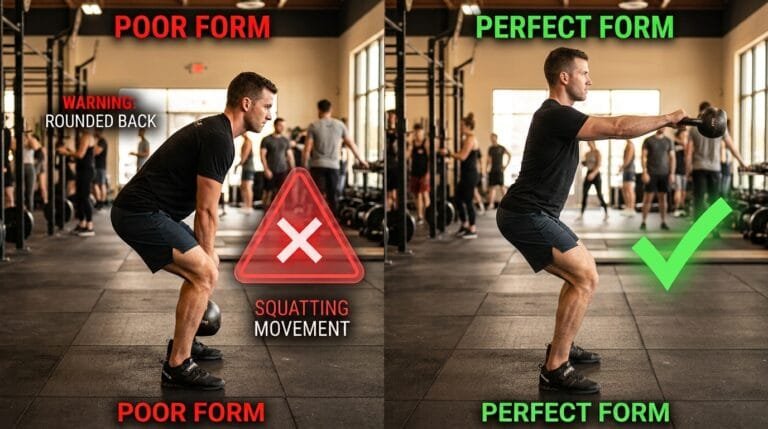
- Technique stays controlled – Slow eccentrics and full pain-free ranges lower peak tissue stress.
- Opposing patterns stay balanced – Match pushing with pulling and quad-dominant with hip-dominant work.
- Recovery is scheduled – Deloads and easier days are planned, not improvised after injury.
- Symptoms are monitored – Early regression prevents long layoffs.
- Sleep and protein are non-negotiable – They determine how much stress the body can absorb.
High-Risk vs Lower-Risk Programming Choices
| Factor | Higher Overuse Risk | Lower Overuse Risk | Practical Adjustment |
|---|---|---|---|
| Weekly sets per pattern | 15–20+ hard sets | 8–12 hard sets for most trainees | Cut sets first when frequency is high |
| Proximity to failure | Frequent true failure | 1–3 RIR on most sets | Reserve failure for low-risk movements |
| Exercise variation | Same stressful variation every session | Rotation of joint-friendly options | Change lever or support when irritation appears |
| Tempo | Fast, uncontrolled reps | 3-second eccentrics, deliberate pauses | Default to controlled lowering |
| Push / pull balance | Heavy pressing, minimal pulling | Pulling volume ≥ pressing volume | Add face pulls, rows, band pull-aparts |
| Deload frequency | Never or only when broken | Every 4–8 weeks | Calendar them in advance |
Joint-Friendly Exercise Adjustments
Squat and Lunge Patterns
Prefer box squats, reverse lunges, and goblet squats to comfortable depth over deep loaded back squats or walking lunges when knees or hips feel sensitive.
Hinge Patterns
Romanian deadlifts, single-leg RDLs, and hip thrusts usually stress the lumbar spine and hamstrings less than repeated conventional deadlifts from the floor.
Upper-Body Pushing
Floor presses, neutral-grip dumbbell presses, and elevated push-ups reduce end-range shoulder stress compared with deep flat bench presses or behind-neck work.
Upper-Body Pulling and Shoulders
Supported rows, face pulls, and band pull-aparts improve scapular control and balance pressing volume. Shoulder-friendly raising variations further reduce risk (Bent Arms vs. Straight Arms in Lateral Raises, The Hidden Mistake in Lateral Raises, and 3 Lateral Raise Modifications).
Grip and Carries
Supporting grip work and carries are valuable but should be progressed gradually to avoid elbow irritation (Do Hand Grippers Really Work?).
Step-by-Step Overuse-Prevention System
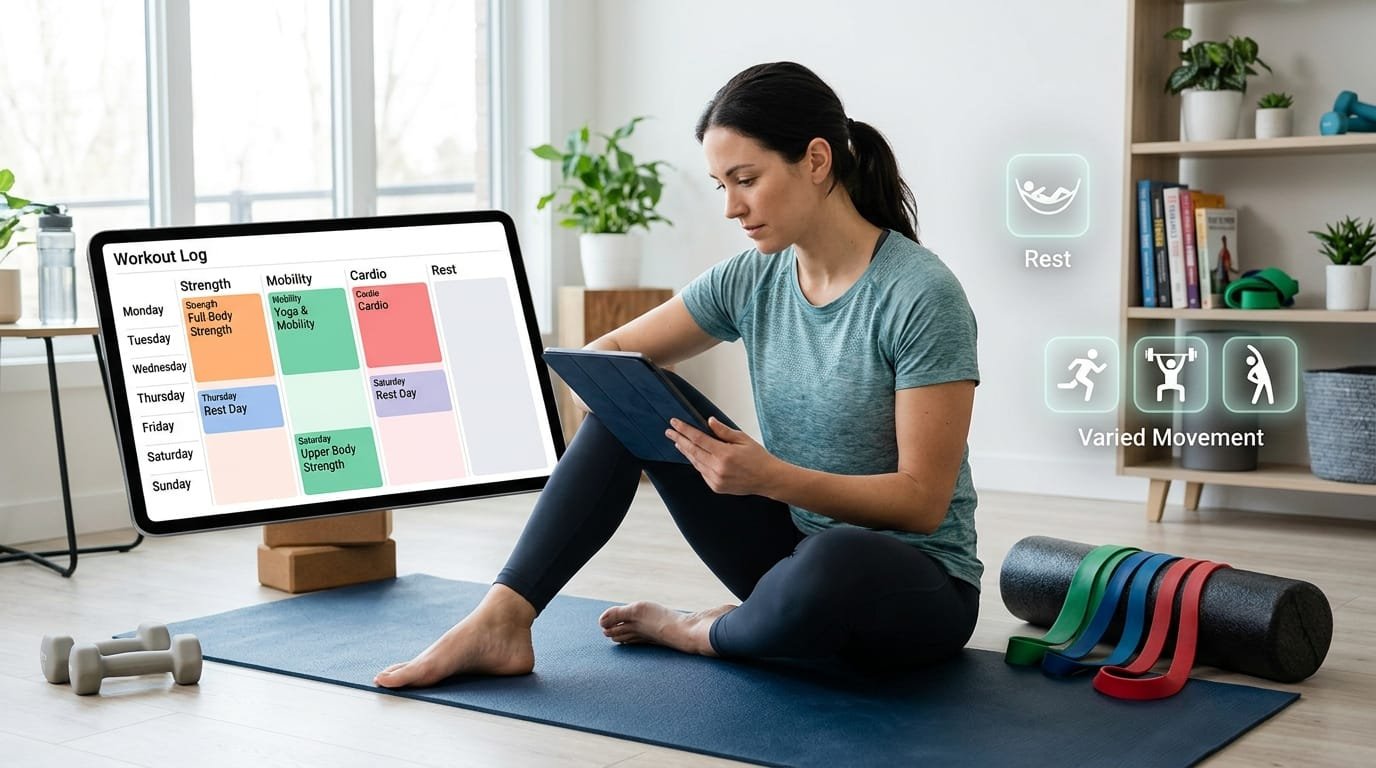
- Log every hard set for one typical week so current volume is visible.
- Set intensity guidelines: most sets stop with 1–3 repetitions in reserve.
- Install a default 3-second eccentric on main lifts.
- Ensure pulling volume meets or exceeds pushing volume.
- Choose the most joint-friendly variation that still allows progressive overload.
- Cap hard sets per pattern according to weekly frequency (higher frequency = fewer sets per session).
- Schedule a deload every 4–8 weeks (40–60 % volume reduction).
- Track resting joint discomfort, performance, and sleep quality.
- Reduce volume or range at the first clear warning signs.
- Reassess the programme every 4–6 weeks and adjust before problems escalate.
Volume Guidelines by Training Frequency
| Sessions per Pattern per Week | Recommended Hard Sets per Session | Notes |
|---|---|---|
| 2 | 3–5 | Standard progression range |
| 3 | 2–4 | Common sustainable high-frequency zone |
| 4 | 2–3 | Volume per session must drop |
| 5–6 | 1–3 | Advanced; monitor symptoms closely |
These ranges assume controlled technique and adequate recovery. Individual tolerance varies.
Recovery Practices That Reduce Overuse Risk
- 7–9 hours of consistent sleep
- Protein intake of approximately 1.6–2.2 g per kg of body weight
- Daily low-intensity mobility or walking
- Immediate volume reduction when joint symptoms appear
- Planned deloads rather than forced layoffs
Sleep and protein determine how much training stress can be absorbed. Neglecting them turns even moderate programmes into overuse problems.
Early Warning Signs and Immediate Actions
| Warning Sign | Likely Meaning | Immediate Action |
|---|---|---|
| Rising resting joint discomfort | Accumulating tissue stress | Reduce volume 30–50 % or switch to friendlier variation |
| Performance drop lasting >2 sessions | Inadequate recovery | Extra rest day or deload |
| Form breakdown under normal loads | Fatigue or technique drift | Lower intensity, film sets, reinforce positions |
| Lingering stiffness or swelling | Local overload | Regress range and volume until clear |
| Motivation crash + poor sleep | Systemic fatigue | Deload and protect sleep |
Acting on these signals early is the difference between a one-week adjustment and a multi-week injury.
Common Home-Training Overuse Mistakes
| Mistake | Result | Better Approach |
|---|---|---|
| Adding sets because the gym is always open | Rapid volume creep | Pre-plan weekly set targets |
| Training to failure on most sets | Excess residual fatigue | Leave 1–3 reps in reserve |
| Ignoring early joint ache | Escalation to injury | Regress at the first clear sign |
| No planned deloads | Forced layoffs | Calendar them every 4–8 weeks |
| Unbalanced pushing and pulling | Shoulder and elbow irritation | Match or exceed pressing with pulling |
| Poor sleep while training hard | Reduced repair capacity | Treat sleep as part of the programme |
Strength training remains highly effective when load is managed and recovery is prioritised (strength training guidance). Practical home-gym approaches emphasise sustainable systems that prevent overuse while allowing consistent progress (home gym equipment prioritisation and budget home gym principles).
Frequently Asked Questions
Is high-frequency training inherently risky?
No. High frequency becomes risky when volume and intensity per session stay high. Reducing sets per session while keeping frequency elevated is often safer and more effective.
How do I know if volume is too high?
Persistent joint discomfort, declining performance, or worsening sleep are reliable indicators. When in doubt, cut sets before cutting loads.
Should I stop training a movement at the first sign of discomfort?
Reduce range, volume, or switch to a friendlier variation first. Complete removal is rarely necessary if symptoms are mild and caught early.
Do I need special equipment to prevent overuse?
No. Controlled technique, volume management, and balanced programming matter more than any specific tool.
How often should I deload?
Every 4–8 weeks of hard training is a practical starting point. Deload earlier if warning signs appear.
Can mobility work prevent overuse injuries?
It helps maintain range and reduce stiffness but cannot compensate for excessive volume or poor recovery. Keep mobility short and specific.
Is muscle soreness a warning sign?
General muscle soreness is normal. Joint pain, tendon discomfort, or soreness that increases over successive sessions is not.
What is the single most effective prevention habit?
Stopping most sets with 1–3 repetitions in reserve and reducing volume at the first clear joint warning signs.
Final Recommendation
Overuse injuries in exclusive home training are prevented by treating volume, intensity, technique, balance, and recovery as a single system. Keep most sets submaximal, control every repetition, balance pushing and pulling, schedule deloads, monitor symptoms daily, and protect sleep and protein intake. When these habits are consistent, high accessibility becomes an advantage rather than a risk.
Log your current weekly volume today, install a 3-second eccentric on main lifts, and plan the next deload. At the first sign of rising joint discomfort, reduce volume rather than pushing through. Home training rewards those who manage stress as carefully as they apply it. Start with load management and recovery fundamentals—the long-term progress will be both greater and more sustainable.