Fixed vs. Adjustable Kettlebells: Long-Term Value Comparison
Quick Answer
Adjustable kettlebells provide outstanding short-to-medium-term value through massive space and cost savings, replacing an entire set with one unit, and convenient progression for beginners and intermediate lifters. While Fixed kettlebells generally offer superior long-term value for serious training because of unmatched durability, consistent handle feel and balance, better performance on ballistic lifts (swings, cleans, snatches), and zero moving parts that can fail. For most home trainees who plan to train kettlebells for years, a hybrid approach—starting with one or two key fixed bells and adding an adjustable for finer increments or travel—delivers the best combination of performance and economics.
Why Long-Term Value Matters More Than Initial Price
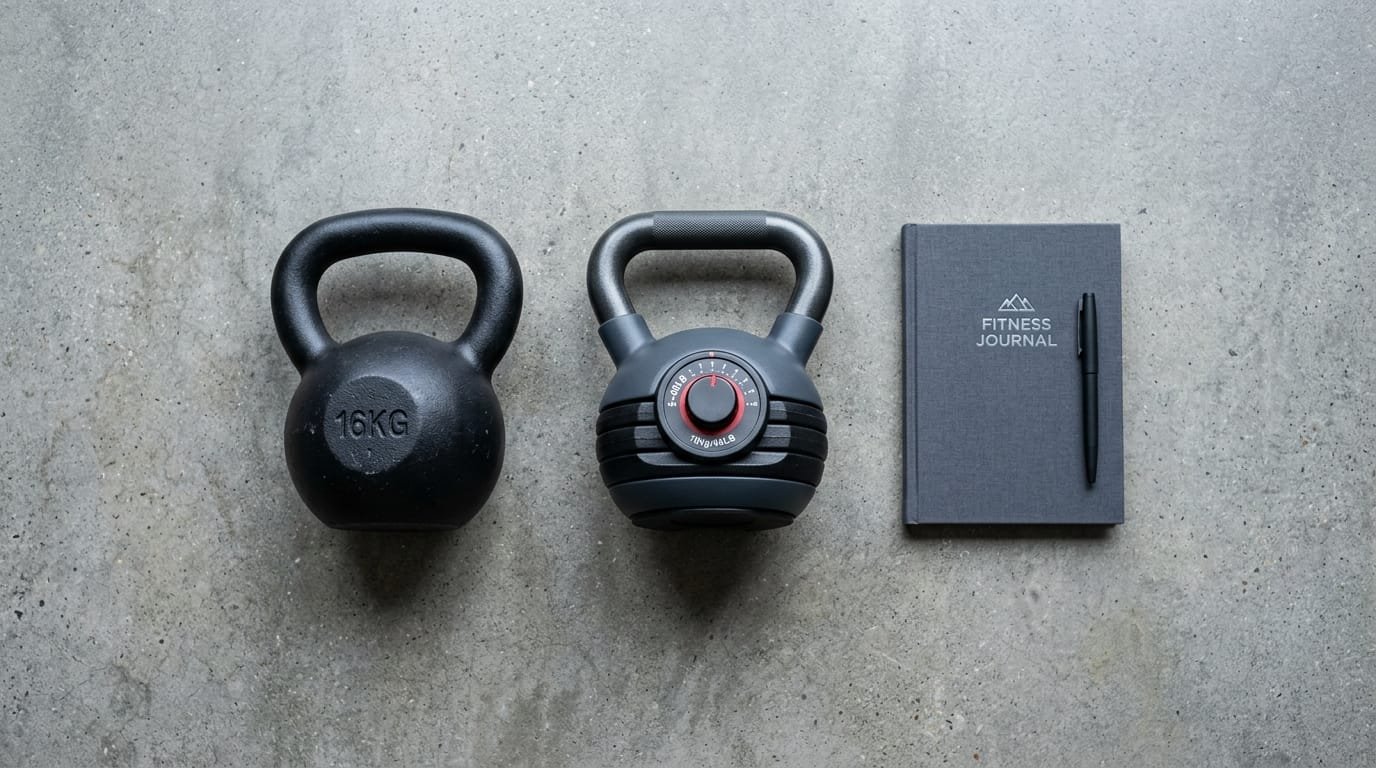
Kettlebells are simple tools, yet the choice between fixed and adjustable models affects training quality, progression speed, storage, total money spent over 5–10 years, and enjoyment of ballistic movements. Fixed bells are single-cast or welded pieces of iron or steel. Adjustable bells use plates, dials, pins, or locking systems to change load. These design differences create clear trade-offs in feel, longevity, and cost of ownership.
Head-to-Head Long-Term Value Comparison
| Factor | Fixed Kettlebells | Adjustable Kettlebells | Long-Term Advantage |
|---|---|---|---|
| Durability | Extremely high – no moving parts | Good to high – locking mechanisms can wear | Fixed |
| Handle & balance consistency | Identical across the set | Can vary slightly with plate configuration | Fixed |
| Ballistic performance (swings, snatches) | Excellent – natural swing dynamics | Good to very good (model-dependent) | Fixed |
| Space efficiency | Low (multiple bells needed) | Excellent (one unit replaces many) | Adjustable |
| Initial cost for full range | High | Lower | Adjustable |
| Cost over 5–10 years | Often lower if training seriously | Can rise with expansions or replacements | Context-dependent |
| Progression granularity | Depends on available sizes | Often finer increments | Adjustable |
| Resale / longevity | Excellent – lasts decades | Good, but mechanisms may limit lifespan | Fixed |
| Travel / portability | Poor | Excellent | Adjustable |
Fixed Kettlebells – Strengths and Long-Term Economics
Advantages
- Virtually indestructible when made of quality cast iron or steel.
- Consistent handle diameter, texture, and center of mass across weights — critical for technique transfer.
- Superior feel on swings, cleans, snatches, and juggling drills.
- No adjustment time or risk of plates shifting mid-movement.
- High resale value and multi-decade lifespan.
Drawbacks
- Higher total cost to acquire a full range (8 kg, 12 kg, 16 kg, 20 kg, 24 kg, etc.).
- Significant storage space required.
- Progression limited to the next available bell size (often 4 kg jumps).
Long-term value reality: Once purchased, fixed bells rarely need replacement. A well-chosen set of 3–5 bells can serve a trainee for a decade or more with zero additional equipment cost.
Adjustable Kettlebells – Strengths and Long-Term Economics
Advantages
- One unit can replace 6–10 fixed bells, saving substantial money and space.
- Convenient for apartments, small home gyms, and travel.
- Finer load increments on many models support smoother progression.
- Ideal for beginners who are still determining their working weights.
- Easy to store in a closet or under a bench.
Drawbacks
- Moving parts (pins, dials, locks, shells) introduce potential failure points.
- Handle feel and balance can change as plates are added or removed.
- Some models feel bulkier or less stable during fast ballistic work.
- Adjustment takes time and can interrupt workout flow.
- Higher-end adjustables still cost a meaningful fraction of a fixed set.
Long-term value reality: Excellent for the first 1–3 years or for space-constrained users. Over longer periods, the need for expansion kits, potential part wear, or desire for better ballistic feel often leads owners to add fixed bells anyway.
Performance Differences That Affect Results
Ballistic kettlebell exercises rely on smooth pendulum dynamics and a consistent “swing sweet spot.” Fixed bells excel here because mass distribution never changes. Many adjustable designs perform well, but some introduce slight rattle, different balance points, or bulkier profiles that alter timing and grip.
For grinding strength work (presses, squats, rows, Turkish get-ups) the difference is smaller — both styles work effectively when load is appropriate.
Cost-of-Ownership Scenarios
Scenario A – Serious long-term kettlebell trainee
Fixed set (e.g., 16, 20, 24, 28, 32 kg) purchased over time: higher initial outlay, near-zero ongoing cost, superior training experience for years.
Scenario B – Space-limited or beginner
Quality adjustable (12–32 kg range): lower entry cost, excellent progression for 1–3 years, possible later addition of fixed bells for preferred working weights.
Scenario C – Hybrid (often optimal)
One or two fixed “daily driver” bells for main swings and presses + one adjustable for warm-ups, accessories, travel, and finer increments. Balances performance, cost, and flexibility.
Step-by-Step Decision Framework
- Assess available storage space honestly.
- Estimate how long you expect to train with kettlebells (1 year vs 5–10+ years).
- Determine primary use: mostly swings and ballistics, or mixed grinding + ballistics.
- Set a realistic budget for the first 12–24 months.
- If space is tight or budget is limited, start with a reputable adjustable.
- If you value feel and plan long-term training, prioritise fixed bells in your most-used weights.
- Consider a hybrid once you know your preferred working loads.
- Factor in warranty length and brand reputation for adjustables.
- Test handle diameter and finish if possible — comfort matters for high-volume work.
- Revisit the decision after 12 months of consistent training.
Integrating Kettlebells with Complete Home Training
Both fixed and adjustable kettlebells support full programmes. Use them for swings, cleans, presses, and squats while maintaining shoulder health through proper lateral-raise technique and dedicated rear-delt work (safe lateral-raise guidance and shoulder health routine.
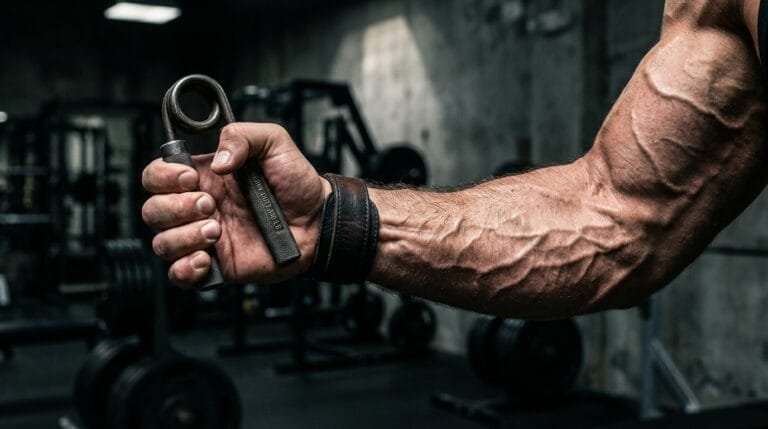
Detailed loading advice appears in the existing kettlebell sizing guide. Grip strength is critical for high-volume swings and carries (grip strength guidance.
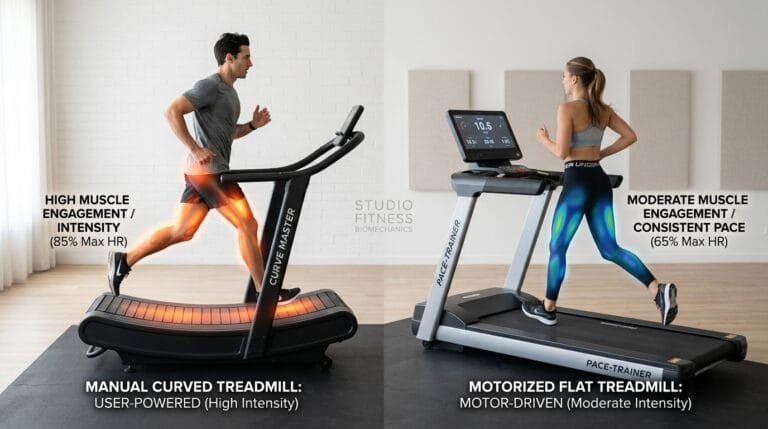
Bands complement kettlebells for activation and lateral stability (Resistance Bands Buying Guide. Core strength supports powerful hip extension (ab roller progressions. Conditioning options including treadmill work add variety (manual treadmill guidance.
Recovery practices allow consistent progressive kettlebell training (Best Post-Workout Recovery Tools, Best Massage Gun for Post-Workout Recovery on a Budget, and Sleep and Recovery Strategies. Tracking ensures progression whether using fixed or adjustable loads (Best Ways to Track Progress Without a Gym or Personal Trainer.
External reviews consistently note that fixed kettlebells win on durability and ballistic feel while adjustables win on space and initial cost efficiency (adjustable vs fixed kettlebells comparison and practical long-term value discussions).
Common Buying Mistakes
- Buying a full fixed set before knowing preferred working weights
- Choosing the cheapest adjustable with poor locking mechanisms
- Ignoring handle diameter and finish
- Assuming one adjustable will permanently replace all fixed bells
- Neglecting floor protection for either type
- Prioritising price over warranty and build quality on adjustables
Frequently Asked Questions
Are adjustable kettlebells durable enough for years of swings?
Quality models hold up well for years, but fixed bells remain more bombproof. Check warranty and user reports on the locking system.
Do adjustable kettlebells feel the same as fixed on swings?
The best modern designs come close, but many lifters still prefer the pure balance and feedback of fixed bells for high-volume ballistics.
Which is better for beginners?
Adjustable kettlebells often make more sense initially because they allow easy load changes while strength is increasing rapidly.
Can I build a complete kettlebell practice with only an adjustable?
Yes for many people, especially with a wide-range model. Serious long-term enthusiasts usually add fixed bells for preferred weights.
How many fixed kettlebells do I actually need?
Most trainees thrive with 3–5 well-chosen bells that cover their main working and progression loads.
Is a hybrid approach worth it?
Frequently yes. Fixed bells for primary work + one adjustable for accessories, warm-ups, and travel offers excellent performance and flexibility.
Do fixed kettlebells hold value better?
Yes. Quality fixed bells retain resale value extremely well and essentially never become obsolete.
Final Recommendation
For pure long-term value, training performance, and durability, fixed kettlebells hold the advantage. They deliver consistent feel, superior ballistic dynamics, and decades of use with no mechanical failure points. Adjustable kettlebells provide outstanding short-to-medium-term value through space savings and lower entry cost, making them ideal for beginners, small spaces, and travel.
The smartest approach for most home trainees is strategic: start with a quality adjustable if space or budget is constrained, or begin with one or two fixed bells in your most-used sizes. Over time, build a small fixed set for primary work and keep an adjustable for versatility. Pair either choice with progressive programming, solid recovery, and consistent tracking. Choose the option that removes barriers to regular training — long-term results come from the kettlebells you actually use, week after week, year after year.