How to Build Stronger Grip and Forearms with Minimal Equipment
Quick Answer
You can build substantially stronger grip and more muscular forearms at home with almost no specialised equipment by systematically training the three primary grip qualities — crush, support, and pinch — along with wrist flexion and extension. The highest-return tools are a pull-up bar (for dead hangs and towel variations), a progressive hand gripper, a simple towel, household objects for pinching, and optional dumbbells or a kettlebell for carries and wrist work. Consistent progressive training performed 2–4 times per week produces measurable increases in grip strength, forearm size, and pulling performance within 8–12 weeks.
Why Grip and Forearm Strength Are Worth Training
Strong hands and forearms improve performance in pull-ups, rows, deadlifts, kettlebell work, carries, and countless daily tasks. Grip strength also correlates with overall muscular development and functional capacity. The forearm contains a complex group of muscles responsible for finger flexion and extension, wrist movement, and rotational control.
Training only one quality (for example, just squeezing a gripper) leaves significant potential untapped. Grip is highly specific: improvements in crush strength transfer only partially to support strength, and pinch strength is a distinct quality. A complete approach therefore includes multiple stimuli (evidence-based overview of grip training).
The Main Grip Qualities and Supporting Wrist Work
| Quality | What It Trains | Best Minimal-Equipment Exercises | Why It Matters |
|---|---|---|---|
| Crush Grip | Maximal squeezing force | Hand gripper closes, towel wringing | Everyday gripping & sports |
| Support Grip | Sustained holding force | Dead hangs, farmer carries, towel hangs | Pull-ups, rows, carries, deadlifts |
| Pinch Grip | Thumb + finger strength | Plate pinches, book pinches, block holds | Balanced hand strength & injury resilience |
| Wrist Flexion | Palm-side forearm muscles | Wrist curls | Forearm size & wrist strength |
| Wrist Extension | Back-of-forearm muscles | Reverse wrist curls, band extensions | Balance, elbow health, aesthetics |
Minimal Equipment That Delivers Maximum Results
- Sturdy pull-up bar or doorway bar
- Progressive hand gripper (or a set of grippers)
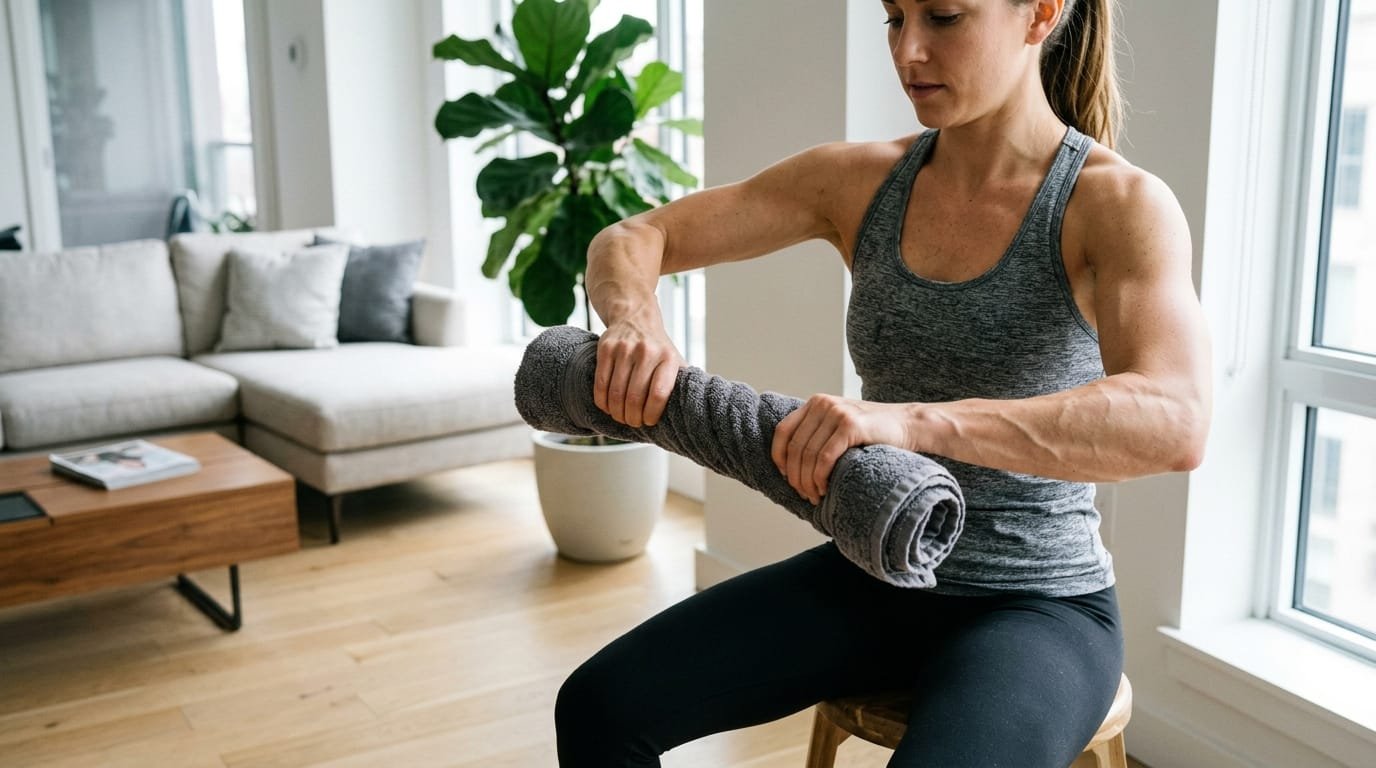
- One or two durable towels
- Optional: dumbbells, kettlebell, or heavy household objects
- Optional: light resistance band for finger and wrist extensions
- Optional: rice bucket for high-rep endurance work
These items are inexpensive, easy to store, and sufficient for serious progress. Related guidance on grippers appears in our hand grip strengthener tips and benefits. For loading carries and swings, see kettlebell sizing recommendations.
Highest-Value Exercises – Detailed Execution and Progressions
1. Dead Hangs (Support Grip Foundation)
Grip a pull-up bar with hands roughly shoulder-width and hang with arms extended. Keep a slight active shoulder engagement rather than complete passivity.
Progressions:
- Increase total hang time
- Add external weight (backpack or belt)
- Use a towel draped over the bar
- Move to mixed-grip or single-arm hangs
- Perform repeated shorter hangs for density
2. Farmer Carries / Suitcase Carries
Hold heavy objects at your sides and walk while maintaining tall posture and locked grip. Dumbbells, kettlebells, or loaded bags all work.
Progressions: heavier load, longer distance, slower pace, or thicker handles.
3. Hand Gripper Training (Crush Grip)
Close a gripper through a full range for repetitions or perform static holds near the closed position.
Programming options:
- Maximal strength: low-rep heavy closes
- Hypertrophy/endurance: higher-rep sets on a moderate gripper
- High-volume “grease the groove” style throughout the day
4. Towel Hangs and Towel Pull-Ups
Drape one or two towels over the bar and grip the ends. The unstable, thick surface dramatically increases grip demand. Perform static hangs or full pull-ups.
5. Pinch Holds
Pinch two smooth weight plates (or heavy books/blocks) together between fingers and thumb and hold for time. Keep the plates vertical.
Progressions: heavier objects, longer holds, or single-hand variations.
6. Wrist Curls (Flexion)
Forearm supported on a bench or thigh, palm up, curl the weight upward through a full wrist range and lower under control. Use a dumbbell, barbell, band, or even a backpack.
7. Reverse Wrist Curls (Extension)
Same setup but palm down. Extend the wrist against resistance. Critical for muscular balance and elbow health.
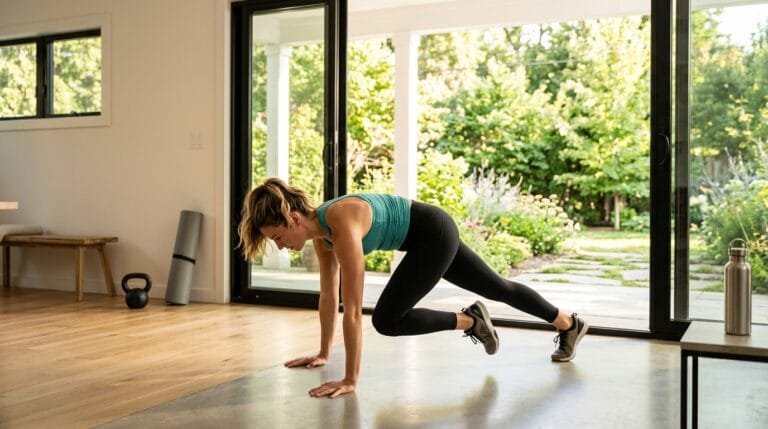
8. Fingertip Planks or Fingertip Push-Ups
Shift bodyweight onto the fingertips while maintaining a rigid plank or performing push-ups. Builds finger strength and endurance under load.
9. Rice Bucket or Sand Bucket Work
Perform open-and-close movements, wrist circles, and “digging” patterns in a bucket of rice. Excellent high-rep, joint-friendly endurance training.
10. Band Finger Extensions
Place a light band around the outside of the fingers and open the hand against resistance. Balances the heavy flexion work that dominates most grip training.
Sample Programmes for Different Levels
Beginner Schedule (2–3 days per week)
- Dead hangs – 3 sets of 15–40 seconds
- Hand gripper – 3 sets of 6–12 closes per hand
- Farmer carry or heavy object carry – 3 sets of 20–45 seconds
- Band finger extensions – 2 sets of 15–20
Intermediate Schedule (3–4 days per week)
- Towel hangs or towel pull-ups – 3–4 sets
- Progressive gripper work (mix of heavy and moderate) – 3–4 sets
- Pinch holds – 3 sets of 20–40 seconds
- Wrist curls + reverse wrist curls – 2–3 sets of 10–15 each
- Optional finisher: fingertip plank or rice bucket – 2 sets
Grip work can be performed at the end of upper-body or pulling sessions, or as short standalone sessions. Forearms generally recover quickly and tolerate frequency well when volume is managed.
Progressive Overload Strategies
- Lengthen hang and carry durations
- Add external load to hangs and carries
- Move to thicker grips (towel, fat-grip equivalents)
- Increase gripper resistance or total repetitions
- Reduce rest periods for density
- Advance to unilateral variations
- Combine methods (e.g., weighted towel hangs)
Record best hang times, carry distances/loads, gripper closes, and pinch times. Small, consistent improvements drive long-term results.
How Grip Training Improves the Rest of Your Programme
Stronger grip removes a common limiting factor in pull-ups, rows, and kettlebell exercises, allowing better stimulus to the back and arms. Maintain healthy shoulder mechanics on all pressing and isolation work by applying the technique principles in safe lateral-raise guidance. Hanging and carrying also build core stability that transfers to movements such as ab-roller progressions.
Low-impact conditioning options discussed in manual treadmill guidance pair well on days when grip fatigue is high.
Volume, Frequency, and Recovery Guidelines
Most trainees make excellent progress with 2–4 dedicated grip sessions per week. Beginners should start at the lower end of volume and frequency. Balance heavy flexion work with regular extension work (band openings and reverse wrist curls) to protect the elbows and wrists.
Adequate protein intake, sleep, and overall recovery remain important. If elbow or wrist irritation appears, temporarily reduce volume, emphasise extensions, and check technique before progressing again.
Common Mistakes That Limit Results
- Training only crush grip and ignoring support and pinch qualities
- Using lifting straps for every pulling set and never challenging grip directly
- Increasing volume or intensity too aggressively and irritating connective tissue
- Neglecting wrist extensors and finger extensors
- Inconsistent training — grip responds especially well to frequent practice
- Relying solely on high-rep rice-bucket work without heavier loading
Frequently Asked Questions
How quickly can I expect grip strength to improve?
Noticeable gains in hang time and gripper performance often appear within 3–6 weeks. More substantial forearm hypertrophy typically requires 8–12 weeks or longer of consistent progressive work.
Can I build impressive forearms with only bodyweight methods?
Yes. Dead hangs, towel variations, fingertip loading, and self-resisted wrist movements produce meaningful strength and size when progressed systematically.
Are hand grippers sufficient on their own?
They are one of the best tools for crush strength but should be combined with support (hangs and carries) and pinch work for complete development.
How often should grip be trained?
2–4 times per week is optimal for most people. Higher frequency is possible if per-session volume stays moderate.
What should I do if my elbows become sore?
Reduce total flexion volume, increase finger- and wrist-extension work, ensure smooth controlled technique, and allow extra recovery. Persistent pain should be evaluated by a professional.
Do I need expensive tools?
No. A pull-up bar, one or two towels, and a basic progressive gripper cover the majority of needs. Household objects work well for pinches and carries.
Will stronger grip improve my pull-ups and rows?
Yes. Grip is frequently the limiting factor; improving it allows more effective training of the larger back and arm muscles.
Is rice-bucket training worth including?
Yes as a high-rep, low-joint-stress endurance and recovery method, especially when paired with heavier loading exercises.
Final Recommendation
Build stronger grip and more muscular forearms with minimal equipment by training crush, support, and pinch grip qualities together with balanced wrist flexion and extension. Prioritise dead hangs, farmer carries, progressive gripper work, towel variations, pinch holds, and regular extension exercises. Progress systematically, train 2–4 times per week, and balance heavy gripping with extension work for joint health.
Start with the highest-value movements, record your performance metrics, and integrate grip training into your existing routine. When these elements are consistent, even the simplest home setup produces substantial improvements in hand strength, forearm size, and overall pulling capacity. Begin today with dead hangs and gripper work — stronger hands and forearms are highly trainable and deliver benefits that extend far beyond the forearm itself.