How Many Weeks Until You Notice Changes with Consistent Elliptical Use?
Quick Answer Most people notice the first improvements—easier breathing, lower perceived effort at the same settings, and better daily energy—within 2–4 weeks of consistent elliptical training (typically 3–5 sessions per week). Measurable cardiovascular fitness gains and subtle body-composition changes usually appear between 6–8 weeks. Clearer fat-loss results, improved muscular endurance, and visible tone commonly become evident by 8–12 weeks when training is paired with appropriate nutrition and recovery. Significant, lasting transformations often require 3–6 months of progressive use. Individual timelines vary with intensity, frequency, diet, sleep, age, and starting fitness level.
Why Consistent Elliptical Training Produces Noticeable Adaptations
The elliptical is a low-impact, reciprocal-motion machine that elevates heart rate while recruiting the quadriceps, hamstrings, glutes, calves, core, and—when the moving handlebars are used—the upper body. Regular sessions drive the classic suite of aerobic adaptations:
- Expansion of plasma volume and increased stroke volume
- Greater mitochondrial density and capillary networks in the working muscles
- Improved ability to oxidise fat and spare glycogen
- Enhanced movement economy and local muscular endurance
Because ground-reaction forces are minimal compared with running, many users can accumulate higher sustainable weekly volume. This combination of cardiovascular stimulus and joint-friendliness makes the elliptical an effective tool for both fitness and body-composition goals. General exercise-adaptation timelines are well summarised in resources such as those from Peloton’s Output and endurance-training reviews.
Detailed Week-by-Week and Month-by-Month Timeline
| Timeframe | What Most People Notice | Primary Physiological Changes | Practical Markers of Progress |
|---|---|---|---|
| Days 1–14 | Improved mood, sessions feel slightly easier, better sleep | Plasma-volume expansion, early neural efficiency | Same resistance feels less taxing |
| Weeks 2–4 | Clearly lower perceived effort, improved stamina | Better oxygen delivery, early mitochondrial adaptations | Can finish workouts less out of breath |
| Weeks 4–6 | Noticeable endurance gains, clothes may fit differently | Continued mitochondrial biogenesis, fat-loss momentum | Resting heart rate begins to drop |
| Weeks 6–8 | Measurable fitness improvement, early body-composition shifts | Often 10–15% VO₂max gains in beginners | Longer sessions feel manageable |
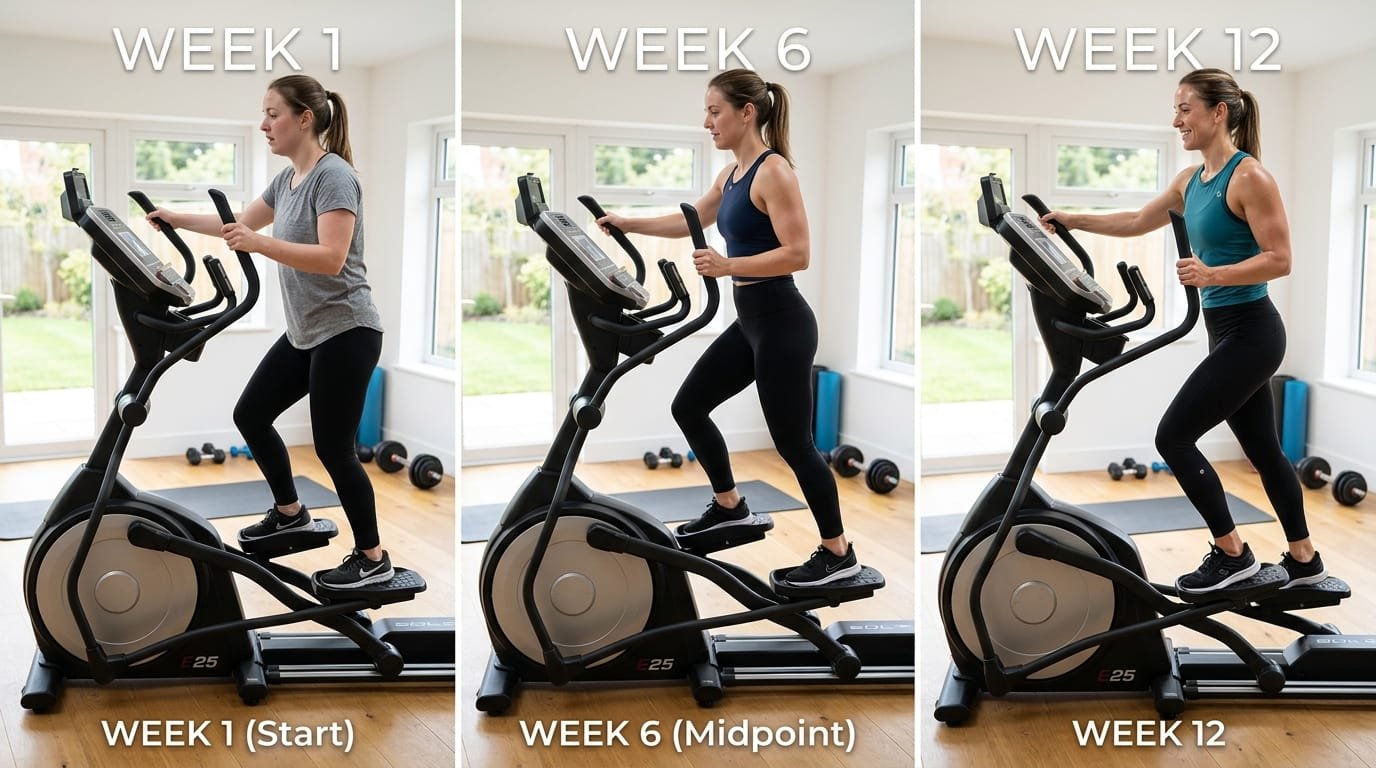
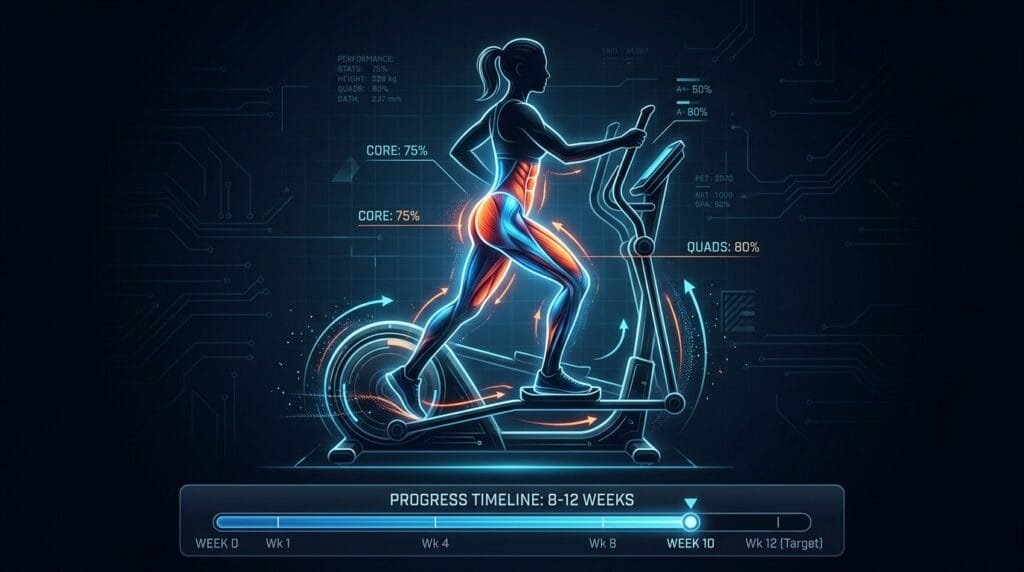
| Weeks 8–12 | Visible fat loss (with deficit), better muscle tone, significantly easier longer efforts | Sustained aerobic and metabolic improvements | Others may begin to comment on changes |
| 3–6 Months | Substantial fitness and appearance changes for consistent users | Cumulative adaptations; progress slows without progression | Clear before/after differences in photos and performance |
These ranges assume 30–45 minutes or more per session, progressive increases in resistance or intensity, and supportive nutrition. Complete beginners frequently progress faster than those who already have a solid aerobic base.
Key Factors That Accelerate or Delay Visible Results
Training Variables
- Frequency of 3–5 sessions per week is effective for most goals.
- Intensity matters: mixing steady-state work with intervals accelerates cardiovascular gains.
- Session duration of 30–45 minutes is a solid default; longer efforts increase total energy expenditure.
- Progressive overload—gradually raising resistance, incline (if available), or interval difficulty—is essential for continued adaptation.
Nutrition and Recovery
- A moderate calorie deficit speeds fat loss; higher protein intake helps preserve lean mass.
- Sleep (7–9 hours) and stress management strongly influence how quickly adaptations occur.
- Consistency compounds; frequent missed weeks reset progress.
Individual Differences
- Starting fitness level, age, genetics, hormonal status, and previous training history all modulate the rate of change.
- Those new to structured cardio usually notice improvements sooner than highly trained individuals.
How to Structure Elliptical Training for Optimal Results
Beginner Phase (Weeks 1–4)
- 3–4 sessions of 20–30 minutes at a conversational intensity.
- Focus on establishing the habit, learning smooth technique, and building tolerance.
Build Phase (Weeks 5–12)
- 4–5 sessions of 30–45 minutes.
- Include 1–2 interval sessions per week (for example, 60–90 seconds harder effort followed by 60–120 seconds easier).
- Gradually increase resistance or total time.
Long-Term Maintenance and Progression
- Periodise intensity (some recovery-oriented weeks, some higher-demand weeks).
- Combine with 2–3 strength-training sessions weekly for superior body-composition outcomes.
- Track objective metrics (time, resistance level, average heart rate, perceived exertion) so progress remains visible.
Step-by-Step Guide to Maximising Results on the Elliptical
- Set up with good posture: tall torso, soft knees, light grip on the handles, and feet flat on the pedals.
- Warm up 5 minutes at low resistance.
- Select an intensity that elevates heart rate into a moderate-to-vigorous zone while remaining sustainable.
- Progress only one variable at a time (duration, resistance, or interval difficulty).
- Cool down and perform light mobility work for the hips, quads, and calves.
- Log every session so trends become clear.
- Align nutrition with your primary goal (deficit for fat loss, maintenance or slight surplus for performance).
- Reassess every 4 weeks and adjust volume or intensity accordingly.
- Prioritise recovery—sleep, manage cumulative fatigue, and insert easier days when needed.
- Commit to at least 8–12 weeks of consistent training before evaluating overall effectiveness.
Common Mistakes That Slow or Stall Progress
- Remaining at the same easy resistance for weeks or months
- Inconsistent attendance or long gaps between sessions
- Ignoring nutrition, especially when fat loss is the goal
- Using poor posture that reduces muscle recruitment or causes joint discomfort
- Expecting large scale changes in the first 2–3 weeks
- Neglecting strength training, which supports long-term body composition and metabolic health
- Overdoing high-intensity work without adequate recovery
Integrating Elliptical Training with Strength, Grip, and Recovery Habits
The elliptical works best as part of a balanced program. Pair it with progressive strength training using adjustable dumbbells or kettlebell exercises 2–3 times per week to preserve or build muscle while improving aerobic fitness. Strong grip endurance helps maintain posture and handle control during longer sessions. Core stability developed through ab roller variations improves force transfer and reduces energy leaks on the machine.
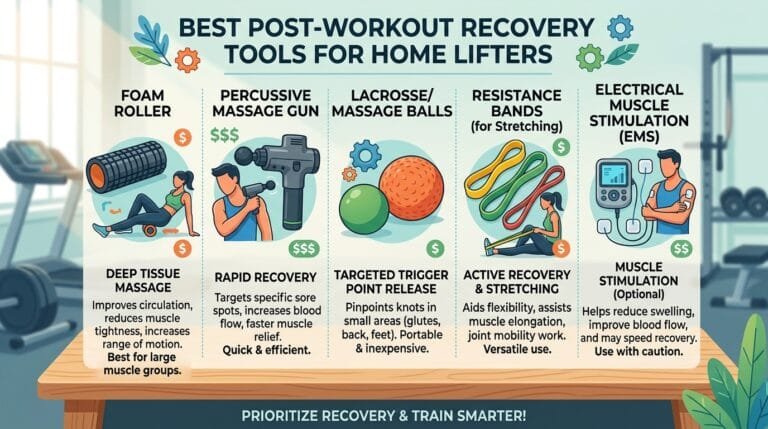
A manual treadmill offers a useful complementary option for walking or jogging on other days. Resistance bands provide joint-friendly strength stimulus when you want variety. Recovery tools such as a budget massage gun can help manage residual lower-body tension. Continue applying sound shoulder-mechanics principles from your lateral raise guidance so any upper-body involvement on the elliptical remains comfortable and productive.
Frequently Asked Questions
How soon will elliptical sessions feel easier? Most consistent users notice reduced perceived effort within 2–4 weeks.
When will fat loss become visible on the scale or in the mirror? Subtle changes often appear around 4–6 weeks; clearer visual results typically require 8–12 weeks when a calorie deficit is maintained. Supporting timeline discussions appear in resources such as Verywell Health’s overview of workout results.
Is 30 minutes per session enough? Yes for beginners and general health. Longer or higher-intensity sessions accelerate fitness and energy-expenditure goals.
Can the elliptical build noticeable muscle? It improves muscular endurance and can enhance lower-body tone, but significant hypertrophy requires progressive resistance training.
How many days per week produce the best results? 3–5 days is effective for most people. Include at least one easier or full rest day to support recovery.
Does intensity matter more than total time? Both are important. Higher average intensity drives faster cardiovascular adaptations; longer duration increases total calories burned. A combination of steady-state and interval work is ideal.
What if I stop seeing progress after a few months? Increase resistance, add intervals, extend duration, improve nutrition, or insert a deliberate recovery week. Plateaus are normal and usually resolve with systematic adjustment.
Final Recommendation
Consistent elliptical use delivers noticeable changes on a reliable timeline. Expect improved energy and easier sessions within 2–4 weeks, clearer fitness gains and early body-composition shifts by 6–8 weeks, and more substantial results by 8–12 weeks and beyond. Long-term success depends far more on regularity, progressive effort, and supportive nutrition than on any single extended workout.
Commit to 3–5 quality sessions each week, gradually raise the demand, combine the elliptical with strength training, and track both performance metrics and subjective feel. Stay consistent for at least 12 weeks. When these fundamentals are in place, the elliptical becomes a highly effective, joint-friendly tool for lasting improvements in endurance, body composition, and overall health.