Best Ab Roller or Wheel for Beginners Without Back Pain
Quick Answer For beginners concerned about back pain, the safest starting options are wide dual-wheel ab rollers or models with spring assistance (such as the Perfect Fitness Ab Carver Pro). These provide greater stability and help control the return phase, reducing the chance of lumbar hyperextension. Begin with very short-range kneeling rollouts while maintaining a braced “hollow body” position (pelvis tucked, ribs down). Progress only when you can hold perfect form. Avoid full-range standing rollouts until you have built solid anti-extension strength.
Why Ab Rollers Can Cause Back Pain (and How to Avoid It)
The ab roller is an anti-extension exercise. Its job is to train your core to resist the natural tendency of the spine to arch (extend) as your arms move away from your body. When form breaks down—most commonly when the hips sag or the lower back arches—the load shifts from the abs onto the lumbar spine. This is the primary reason beginners experience back discomfort.
Done correctly, the same movement strengthens the deep core muscles that actually protect the spine. Independent testing and coaching resources (including detailed reviews from Garage Gym Reviews and Strong Home Gym) consistently show that the difference between a useful tool and a painful one almost always comes down to range of motion, bracing, and progressive loading.
Best Features for Beginners Who Want to Protect Their Back
- Wide dual wheels or extra-wide single wheel — Greater side-to-side stability so the roller tracks straight and reduces the need for corrective core work that beginners often lack.
- Spring-assisted return — Helps pull you back from the extended position, making the eccentric-to-concentric transition safer.
- Comfortable, non-slip handles — Reduces wrist and shoulder compensation.
- Included or recommended knee pad — Protects the knees so you can focus on form rather than discomfort.
- Smooth rolling action — Jerky or sticky wheels force compensatory movements.
Comparison of Beginner-Friendly Options
| Feature | Dual Wide Wheel | Spring-Assisted (e.g. Ab Carver Pro) | Standard Single Narrow Wheel |
|---|---|---|---|
| Stability for beginners | Excellent | Very Good | Poor |
| Assistance on return | None | Yes | None |
| Learning curve | Easier | Easiest | Steepest |
| Long-term challenge | Good | Moderate | Highest |
| Back-pain risk if form is off | Lower | Lowest | Highest |
| Best starting choice | Strong option | Top recommendation for absolute beginners | Only after mastery |
Step-by-Step Guide to Using an Ab Roller Safely
- Build a foundation first Be able to hold a strict forearm plank for 45–60 seconds with a neutral spine and no hip sag before attempting rollouts.
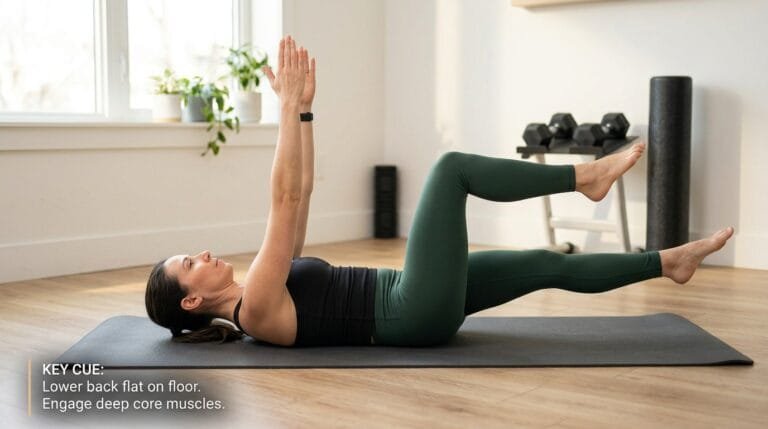
- Set up correctly Kneel on a pad or mat. Grip the handles firmly. Brace your core by tucking the pelvis (think “belt buckle toward chin”) and pulling the ribs down. This creates the hollow-body position that protects the lower back.
- Start with a tiny range of motion Roll forward only 6–12 inches while keeping the hollow position. Pause briefly, then pull back under control. If your lower back wants to arch at any point, you have gone too far.
- Breathe and brace Exhale slightly and maintain tension throughout the movement. Do not hold your breath rigidly or let the core go soft.
- Progress gradually Increase distance only when you can complete the current range with perfect form for multiple controlled reps. Add sets before adding range.
- Stop immediately if form breaks Sagging hips or an arched lower back means the set is over. Regress the range or return to planks.
Recommended Progression for Beginners
- Weeks 1–2: Very short kneeling rollouts (6–12 inches), 2–3 sets of 6–8 controlled reps.
- Weeks 3–4: Gradually increase distance while keeping perfect bracing.
- Later: Full kneeling rollouts, then (only when ready) standing rollouts or more advanced variations.
How the Ab Roller Fits into a Complete Home Routine
A strong anti-extension core improves performance and safety in nearly every other lift. Pair short ab-roller sessions with adjustable dumbbell work, kettlebell training, or weight-bench pressing. The same scapular and core control principles that protect your back on the roller also apply to lateral raises and overhead work. Good grip strength helps you maintain handle control without unnecessary tension elsewhere.
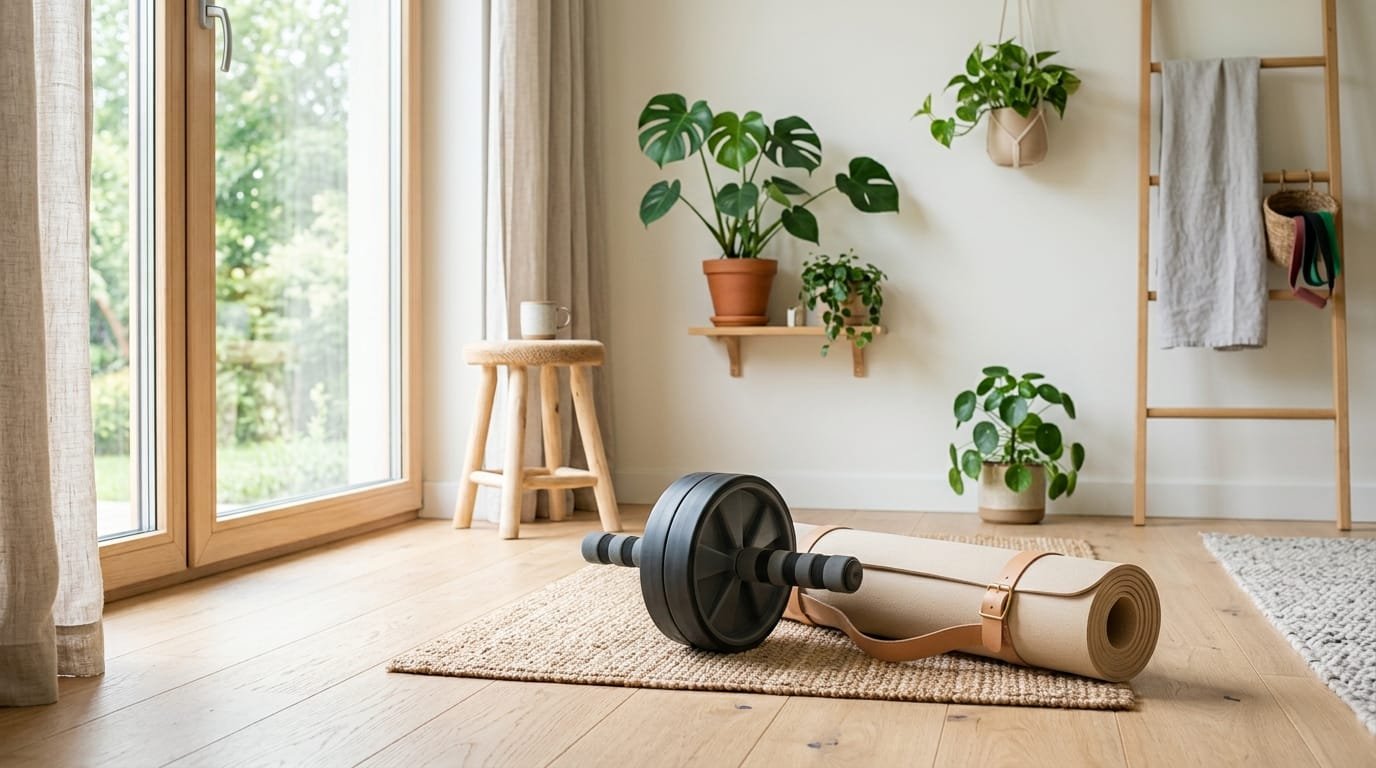
Use the roller on a quality home gym floor mat so the wheels track smoothly and your knees stay comfortable.
Common Form Mistakes That Cause Back Pain
- Letting the hips sag or the lower back arch.
- Rolling out too far too soon.
- Using momentum instead of controlled strength.
- Holding the breath and creating excessive intra-abdominal pressure without proper bracing.
- Starting from a standing position before mastering the kneeling version.
Frequently Asked Questions
Is an ab roller safe for beginners with a history of back pain? Only if you have medical clearance and can maintain perfect form with a very limited range. Many people with previous back issues do better with other core exercises first.
What is the best ab roller for absolute beginners? A wide dual-wheel model or a spring-assisted design such as the Perfect Fitness Ab Carver Pro offers the most help with stability and controlled return. Detailed comparisons are available from sources like Garage Gym Reviews and BarBend.
How many reps should a beginner do? Quality over quantity. Start with 2–3 sets of 6–8 very controlled, short-range reps. Stop the set the moment form deteriorates.
Should I feel it in my lower back? No. You should feel the work primarily in the abs and the muscles that keep the spine neutral. Lower-back strain is a signal to reduce range or stop.
Do I need a special mat? A simple knee pad or folded exercise mat is highly recommended to protect the knees and allow longer, higher-quality sets.
Can I do ab rollouts every day? Most beginners benefit from 2–4 sessions per week with rest days in between while the core adapts.
Final Recommendation
Choose a stable, beginner-friendly ab roller—preferably wide dual-wheel or spring-assisted—and treat range of motion as the primary progressive variable. Master the hollow-body brace, keep the movement short and controlled, and only advance when form is perfect. This approach turns the ab roller from a potential source of back pain into one of the most effective tools for building a resilient, injury-resistant core.
Start with the foundation (plank strength), select a supportive roller, use a very limited range, and progress slowly. Consistent, high-quality practice delivers stronger abs and better spinal protection without the common pitfalls that sideline many beginners.
Ready to begin? Grab a stable roller, a knee pad, and focus entirely on form for the first several sessions. Your back—and your future training—will thank you.