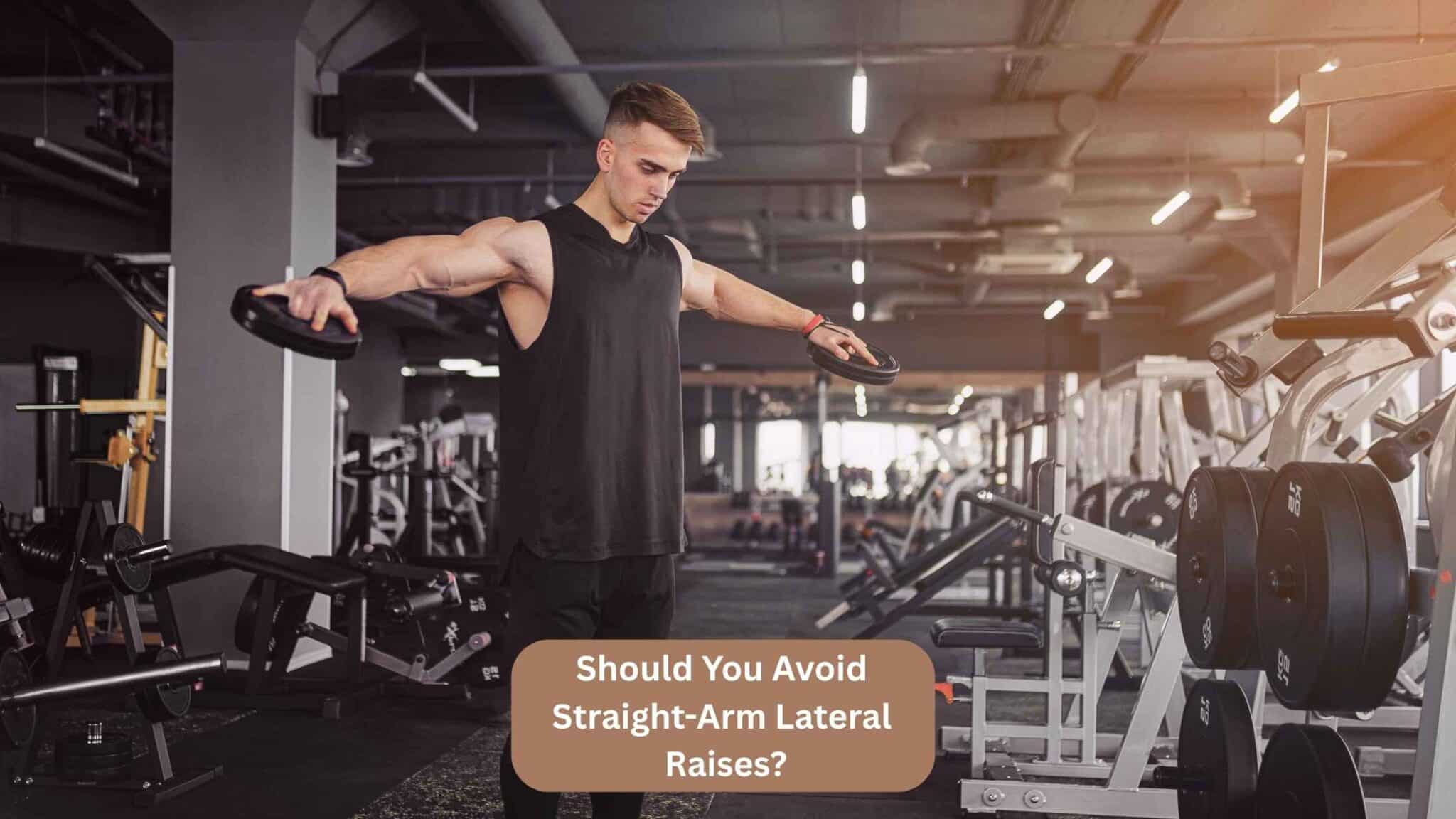
Should You Avoid Straight-Arm Lateral Raises? A Physiotherapist’s Take
Quick answer: Straight-arm lateral raises aren’t inherently dangerous, but they do increase the lever arm and joint demand on your shoulder compared to a bent-arm version — making them worth avoiding or modifying if you have a history of shoulder impingement, rotator cuff issues, or current shoulder pain. For most healthy lifters with good technique, they’re a reasonable training option.
Researched and written by the GymGoodies team, fact-checked against manufacturer specs and current fitness guidance.
Straight-arm lateral raises get a mixed reputation — some lifters swear by them for shoulder definition, while others avoid them entirely over injury concerns. The honest, physiotherapy-informed answer sits in between: the exercise itself isn’t dangerous, but certain people and certain execution habits make it considerably riskier than others.
Why Straight-Arm Raises Get Flagged as Risky
The core mechanical concern comes down to leverage. A fully straight arm lengthens the distance between your shoulder joint and the weight in your hand, which increases the torque (rotational force) your shoulder has to control throughout the movement. This isn’t automatically harmful, but it does raise the demand on your rotator cuff and surrounding stabilizing structures compared to a bent-arm version of the same exercise.
This matters specifically because shoulder impingement — a common source of shoulder pain — is caused by chronic, repeated compression of the rotator cuff tendons, and according to the American Physical Therapy Association’s patient guide to shoulder impingement, people who perform repetitive overhead or lateral arm movements are at elevated risk, particularly if there’s already an imbalance in shoulder and shoulder-blade muscle strength.
Who Should Genuinely Be Cautious
- Anyone with a current or recent shoulder impingement diagnosis — the repetitive lateral-raise pattern is exactly the kind of movement that can aggravate this condition if not modified.
- People with a history of rotator cuff issues, even if currently asymptomatic, since these tendons are directly involved in controlling the shoulder through this movement.
- Lifters with known scapular control issues (shoulders that shrug up or “wing” during overhead or lateral movements) — the increased leverage of a straight arm makes poor scapular control more consequential.
- Anyone experiencing pain, pinching, or a “catching” sensation during the movement — this is a signal to stop and modify, not push through.
Who Can Generally Train Straight-Arm Raises Safely
- Healthy lifters with no history of shoulder pain or diagnosed shoulder conditions
- Lifters who can maintain stable, controlled scapular positioning (shoulder blades down and back, not shrugging) throughout the full range of motion
- Anyone using an appropriate weight that allows full control — not one that forces momentum or compensation to complete the rep
A Physiotherapist-Informed Approach to Training This Movement
Rather than treating this as a strict yes/no decision, a more useful framework is a graded approach:
- Start with bent-arm lateral raises to build baseline shoulder stability and confirm you can maintain good scapular control without shrugging. Our Bent-Arm Lateral Raises guide covers this variation in depth.
- Progress toward a slight bend (15-30 degrees) rather than jumping straight to a fully locked-out arm, gradually increasing the lever demand as your control improves.
- Only move to a fully straight arm once you can perform the bent and slightly-bent versions with consistently good form and no pain.
- Stop or scale back immediately if you notice pinching, catching, or pain — this isn’t a “push through it” situation, since impingement symptoms tend to worsen with continued aggravation rather than resolve on their own.
Why Posture and Scapular Control Matter More Than Arm Position Alone
Shoulder impingement risk isn’t determined by arm position in isolation — posture and shoulder-blade control play a major role too. Maintaining proper shoulder and shoulder-blade muscle balance, along with good posture generally (avoiding prolonged forward-head, rounded-shoulder positions), is a well-established part of both preventing and managing impingement symptoms. This means someone with excellent scapular control and posture may tolerate straight-arm raises just fine, while someone with poor control might feel pain even with a bent-arm version.
Safer Alternatives If You’re Managing Shoulder Sensitivity
- Bent-arm lateral raises — reduces the lever arm while still training the same muscles
- Cable or machine lateral raises, which can offer more consistent, controllable tension — our Lateral Raise Machines guide covers how machine design interacts with arm position specifically
- Scapular stability and rotator cuff activation exercises performed before lateral raise work, to help address the muscle imbalances that often underlie impingement risk in the first place
Common Mistakes That Increase Risk, Regardless of Arm Position
- Using too much weight, which forces momentum and poor scapular control regardless of whether your arm is bent or straight.
- Letting the shoulders shrug up toward the ears during the movement, a sign that the trapezius is compensating rather than the deltoid doing the work.
- Ignoring early warning signs like mild pinching or discomfort, rather than modifying the exercise or reducing load before symptoms escalate.
- Skipping a proper warm-up, particularly scapular activation work, before loading the shoulder with lateral raises.
Frequently Asked Questions
Is it ever necessary to completely avoid straight-arm lateral raises?
For most healthy people, no — but if you have a current shoulder impingement diagnosis, a history of rotator cuff issues, or you experience pain/pinching during the movement, it’s worth avoiding or modifying and consulting a physical therapist.
How do I know if my shoulder pain is impingement-related?
Common signs include pain when reaching overhead or to the side, restricted motion, and pain when lying on the affected shoulder — but a proper diagnosis requires an evaluation from a physical therapist or doctor rather than self-assessment alone.
Can I still train shoulders if I have impingement symptoms?
Often yes, but typically with modified exercises and reduced range of motion under professional guidance, rather than continuing standard lateral raises as-is. A physical therapist can help identify which specific modifications are appropriate for your situation.
Bottom Line
Straight-arm lateral raises aren’t inherently dangerous, but they do increase joint demand compared to bent-arm variations, which matters most for people with existing shoulder issues, poor scapular control, or a history of impingement. For most healthy lifters with good technique and appropriate loading, they’re a reasonable training option — the key is matching the exercise to your current shoulder health rather than assuming one arm position is universally safe or unsafe.
Have you modified your lateral raises due to shoulder discomfort? Let us know in the comments what’s worked for you — and if you’re dealing with ongoing pain, it’s worth getting evaluated by a physical therapist rather than troubleshooting through trial and error alone.