What Does a Toning Ball Do? Let’s Talk about this Underrated Fitness Tool
Quick answer: A toning ball is a small, palm-sized weighted ball (typically 2-10 lbs) used for Pilates-style, balance, and light resistance exercises. Research on training with unstable, weighted implements shows it genuinely increases core and stabilizing muscle activation compared to stable surfaces — but this comes with a real trade-off: reduced force and power output compared to traditional stable resistance training. It’s a legitimate accessory tool, not a replacement for progressive strength training if building meaningful muscle is your primary goal.
Researched and written by the GymGoodies team, fact-checked against manufacturer specs and current fitness guidance.
Toning balls occupy a specific niche in fitness equipment — smaller and more portable than a medicine ball, designed around balance, coordination, and light resistance work rather than heavy lifting. Here’s an honest breakdown of what the research actually supports about this kind of training.
What a Toning Ball Actually Is
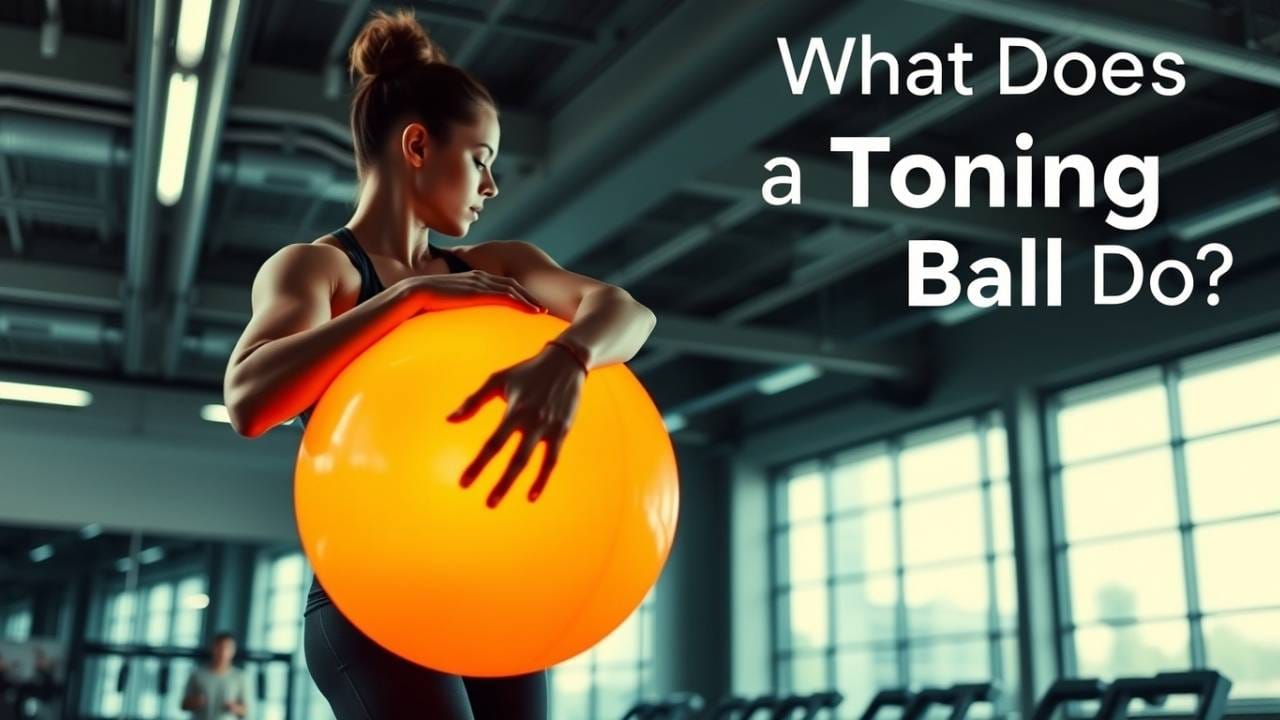
A toning ball is a soft, palm-sized weighted ball, typically filled with sand and covered in a grippy PVC exterior, generally available in a range from about 2 to 10 pounds. Originally developed for Pilates exercises, it’s designed to fit comfortably in one hand, and its inherent instability (from the internal sand filling shifting slightly during movement) is a deliberate design feature, not a flaw.
A Quick Word on “Toning” as a Concept
Before getting into the research, it’s worth addressing the word itself. As we’ve covered in our Inner Arm Transformation guide, “toning” isn’t a distinct physiological process separate from building muscle and reducing body fat — what people describe as a “toned” appearance is really the combination of some genuine muscle development and visible definition from lower body fat covering it. A toning ball doesn’t do anything uniquely different from other resistance tools in this respect; it’s simply a specific implement, not a special category of exercise that “tones” differently than other training.
What the Instability Actually Adds
Where a toning ball’s design genuinely does something distinct is through its built-in instability. A comprehensive review published in the International Journal of Sports Physical Therapy by researcher David Behm and colleagues examined instability resistance training extensively, finding that performing exercises under unstable versus stable conditions consistently increases core and trunk muscle activation — with the reviewed studies showing, on average, a 47.3% increase in trunk muscle activation under unstable conditions, a genuinely large effect.
The Trade-Off Worth Understanding
This same research is clear about an important trade-off: instability resistance training also shows measurably reduced force, power, and movement velocity compared to traditional, stable resistance training. In practical terms, this means you generally can’t move as much weight, or move it as explosively, when working with an unstable implement like a toning ball compared to a standard dumbbell of the same weight — your body has to divert some effort toward stabilization rather than pure force production.
What This Means Practically
- Genuine benefit: increased core and stabilizer muscle engagement, which happens somewhat automatically as your body works to control the ball’s shifting weight during movement
- Genuine limitation: reduced capacity for heavy loading or maximal force output compared to stable equipment, meaning a toning ball isn’t well-suited as your primary tool for building maximum strength or muscle size
Who This Tool Genuinely Suits
- Anyone specifically prioritizing core engagement and stability as part of their training, since the instability genuinely increases this specific training stimulus
- Rehabilitation and return-to-training contexts — the same review notes that instability training can be a useful progressive component in rehab programs, particularly relevant for coordination and motor control adaptations
- Beginners or those newer to structured exercise, given the light weight range and versatility for basic movement patterns
- Pilates and mind-body practitioners, since this is genuinely the tool’s original design context
- Travel or home training, given its compact, portable size
Who Might Want a Different Primary Tool
- Anyone whose primary goal is maximizing strength or muscle size — given the documented force/power trade-off, a toning ball shouldn’t be your main tool if significant strength gains are the priority; standard dumbbells or barbells remain more appropriate for that specific goal
- Advanced lifters looking for progressive overload — the light weight range (2-10 lbs) will quickly become insufficient for meaningful strength progression for most trained individuals
Practical Exercises Using a Toning Ball
- Fire hydrants and donkey kicks — the ball adds light resistance to these glute-focused movements, which we also cover in more depth (using different equipment) in our Booty Gains Made Easy guide
- Wall squats with the ball positioned against your lower back — using the wall for stability while the ball’s slight give adds a mild instability element
- Standing side-lying arm circles or butterflies — classic Pilates movements the ball was originally designed for, engaging shoulder stabilizers
- Weighted stretching assistance — the ball’s added weight can deepen certain stretches compared to using no resistance at all
- Balance and core work, using the ball as an unstable surface element or handheld weight during planks, standing balance holds, or rotational core movements
A Reasonable Way to Use a Toning Ball in a Broader Program
Rather than treating this as a standalone training tool, it fits best as a complementary piece:
- Use standard progressive resistance training (dumbbells, barbells, or machines) as your primary strength-building tool, since these allow for the higher loading and force production the research shows unstable implements can’t fully replicate.
- Incorporate a toning ball for specific accessory work — core stability, balance training, or Pilates-style movement patterns where its light weight and instability are genuinely advantageous rather than limiting.
- Consider it a rehab or coordination tool if you’re working through an injury or specifically focused on motor control, where the research specifically supports this application.
Common Misconceptions About Toning Balls
- “Toning balls create a different kind of muscle than regular weights” — this isn’t accurate; muscle tissue responds to training stimulus the same way regardless of implement, though the specific stimulus (light weight plus instability) does emphasize different training qualities (stability, coordination) rather than maximal strength.
- “You need a toning ball specifically to ‘tone’ rather than ‘bulk up'” — as covered above, “toning” isn’t a distinct physiological process a specific tool produces; visible muscle definition comes from a combination of some muscle development and lower body fat, achievable through many different training tools and approaches.
- “Light weight with instability is superior to standard progressive resistance training” — the research shows a genuine trade-off, not a straightforward superiority; each approach emphasizes different training qualities.
Frequently Asked Questions
Can I build meaningful muscle using only a toning ball?
This is limited by the light weight range and the documented force/power trade-off from instability — a toning ball works better as a complementary tool for core engagement and coordination than as a primary tool for building significant muscle size or strength.
Is a toning ball the same as a medicine ball?
Not quite — toning balls are generally smaller, lighter, and specifically palm-sized for one-handed use in Pilates-style movements, while medicine balls tend to be larger and are often used for two-handed, more dynamic or explosive throwing-based exercises.
Is instability training actually backed by real research, or is it just a fitness trend?
It’s genuinely backed by research, particularly for core activation and rehabilitation applications — the key nuance is understanding it as a specific tool with real trade-offs (less force/power capacity) rather than a universally superior training method.
Bottom Line
A toning ball is a legitimate, research-supported tool for increasing core and stabilizer muscle engagement through its built-in instability — genuinely useful for Pilates-style training, rehabilitation, and coordination work. But the same research showing this benefit also documents a real trade-off: reduced force and power output compared to stable resistance training, meaning it works best as a complementary accessory tool rather than a replacement for standard progressive resistance training if building significant strength or muscle is your primary goal.
Do you use a toning ball as part of your routine? Let us know in the comments what exercises you’ve found it works best for.