
Do Forearm Strengtheners Work? How to Build Rock-Solid Grip Strength (Backed by Science)
Quick answer: Yes, forearm strengtheners genuinely work — research has shown measurable strength improvements from consistent forearm training over several weeks. But “hardening” isn’t a distinct physiological process separate from regular muscle building; it’s really about increasing forearm muscle size and density through progressive training, which becomes visible as definition once combined with a body fat level that reveals it, similar to how “toning” works elsewhere in the body.
Researched and written by the GymGoodies team, fact-checked against manufacturer specs and current fitness guidance.
“Hardening” your forearms is a common way people describe wanting bigger, more defined, visibly stronger-looking forearms. Before covering what actually works, it’s worth being clear about what’s really happening physiologically — since the framing affects what approach makes sense.
What “Hardening” Actually Means, Physiologically
There isn’t a separate process called “hardening” distinct from regular muscle hypertrophy (growth) and strength development. What people typically mean by harder, more defined forearms comes down to two combined factors: genuinely building forearm muscle mass through progressive resistance training, and having a body fat percentage low enough that the muscle definition is visible. This mirrors the same “toning” conversation we’ve covered elsewhere on the site — there’s no unique training method that produces a qualitatively different “hard” muscle versus a “soft” one; it’s building real muscle and revealing it.
Do Forearm Strengtheners Actually Work? Yes, Genuinely
This part has real research support. A controlled study examining 12 weeks of dedicated wrist and forearm training in male high school baseball players found genuine, measurable strength improvements from consistent forearm-focused training — confirming this is a real, trainable muscle group that responds predictably to a structured program, not something limited by fixed genetics alone.
Why Forearm Training Matters Beyond Appearance
This connects to something with genuinely significant research behind it: grip strength — closely tied to forearm strength and development — has been linked in large population studies to broader health markers. As covered in our Squeeze Bar guide, a landmark study following nearly 140,000 adults found grip strength was a stronger predictor of mortality risk than blood pressure, though it’s worth repeating the same important caveat here: this reflects grip strength as a broader marker of overall health and aging, not necessarily proof that training grip specifically, in isolation, extends your life. Regardless, the direct strength and functional benefits of forearm training are real and well worth pursuing on their own merits.
What EMG Research Shows About the Most Effective Exercises
Not all forearm exercises are equally effective, and research comparing different movements gives some genuinely useful, specific guidance:
- Reverse curls (using an overhand, pronated grip) show significantly higher activation of the brachioradialis — one of the largest, most visible forearm muscles — compared to traditional curls.
- Hammer curls (neutral grip, palms facing each other) also strongly activate the brachioradialis, making this another effective option for building visible forearm size.
- Wrist curls (palm-up) specifically target the wrist flexors, the muscles on the inside of your forearm responsible for gripping motion.
- Reverse wrist curls (palm-down) target the wrist extensors on the top of your forearm — training both directions creates more balanced, complete forearm development rather than overdeveloping one side relative to the other.
- Farmer’s carries engage the entire forearm musculature through sustained isometric tension — since you’re maintaining a hard grip on a heavy weight for time or distance, this works your flexors, extensors, and grip muscles simultaneously in a way that mimics real-world grip demands more closely than isolated curling movements.
A Well-Rounded Forearm Training Approach
Given this research, a genuinely effective approach trains multiple angles rather than relying on just one exercise:
- Reverse curls or hammer curls — 3 sets of 10-15 reps, for brachioradialis-focused size development
- Wrist curls (palm-up) — 3 sets of 12-15 reps, for forearm flexor development
- Reverse wrist curls (palm-down) — 3 sets of 12-15 reps, for forearm extensor development, balancing out the flexor-focused work
- Farmer’s carries — 2-3 sets, walking for time or distance with a genuinely challenging weight, for overall isometric grip and forearm endurance
Technique Considerations That Matter
- Slow, controlled tempo, particularly on the lowering (eccentric) phase — research on muscle hypertrophy consistently identifies mechanical tension and controlled eccentric loading as key drivers of growth, and forearm training responds to this principle just like other muscle groups.
- Full range of motion — partial reps limit how much of the muscle’s full working range actually gets trained, similar to the guidance we’ve covered for other grip tools.
- Keep your shoulders relaxed and down during wrist curls specifically — letting your shoulders rise pulls tension away from the forearms and toward your traps, reducing the effectiveness of the movement.
- Progressive overload over time — gradually increasing weight, reps, or time under tension, following the same fundamental principle that drives muscle growth throughout the body.
A Reasonable Training Frequency
Similar to guidance for other grip and forearm tools, 2-4 sessions weekly with adequate recovery between sessions targeting the same muscles is a reasonable structure — daily maximal training isn’t necessary and can increase overuse injury risk without accelerating results.
Why Grip Fatigue From Other Lifts Counts Too
If you’re already doing pulling-focused compound lifts — deadlifts, rows, pull-ups — you’re already training your forearms indirectly through sustained grip demand during those exercises. Our guide on training your lats touches on grip as a frequent limiting factor in pulling exercises, and our RopeFlex RX4400 guide covers another training modality (sustained rope-pulling) that places genuine forearm demand alongside its cardiovascular benefits. This means dedicated forearm work is a genuine addition on top of your existing training, not something entirely separate from it — though isolated exercises still offer more targeted, trackable progression than incidental grip work from other lifts alone.
Common Mistakes When Training Forearms
- Only training wrist flexion (palm-up curls) and neglecting extension, creating an imbalanced forearm rather than the more complete development that training both directions provides.
- Rushing through reps without controlling the eccentric phase, missing out on a key driver of muscle growth.
- Training forearms daily without adequate recovery, increasing overuse injury risk (particularly relevant given how frequently the forearms are also indirectly worked during other pulling and pressing exercises) without necessarily accelerating results.
- Expecting a fundamentally different training approach for “hardening” versus regular muscle building — as covered above, this is the same underlying process (progressive resistance training plus appropriate body fat levels), not a separate technique.
Frequently Asked Questions
How long until I see noticeable forearm size and definition improvements?
Based on the 12-week training research referenced above, meaningful strength and development improvements are achievable within a few months of consistent, structured training — visible definition also depends on your overall body fat level, not muscle training alone.
Do I need special equipment, or can I train forearms with just dumbbells?
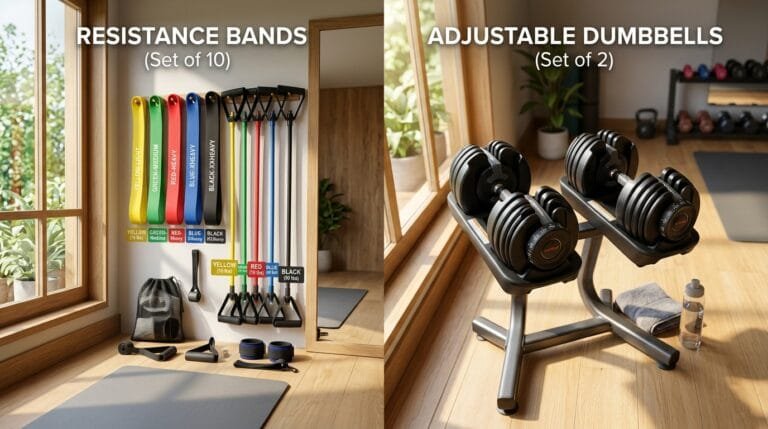
Dumbbells alone can effectively train all the major forearm movement patterns covered here (curls, wrist curls, carries); specialized grip tools like a squeeze bar can add useful variety but aren’t strictly necessary for effective forearm training.
Is grip strength training the same as forearm size training?
They’re closely related but not identical — grip strength specifically relates to your ability to generate force through your hand and fingers, while forearm size training encompasses the broader muscle development discussed here; the exercises overlap significantly, but farmer’s carries and dedicated grip tools tend to emphasize pure grip strength more directly than isolated curl movements do.
Bottom Line
Forearm strengtheners and dedicated forearm training genuinely work, with real research supporting measurable strength gains from a consistent, structured program. “Hardening” isn’t a separate physiological process from regular muscle building — it’s the combination of building genuine forearm muscle mass through exercises like reverse curls, wrist curls in both directions, and farmer’s carries, alongside a body fat level that makes that development visible. A well-rounded approach training both flexors and extensors, with progressive overload over time, is the evidence-based path to the result most people mean when they ask about “hardening” their forearms.
What’s your current forearm training routine look like? Let us know in the comments which exercises you’ve found make the biggest difference.