
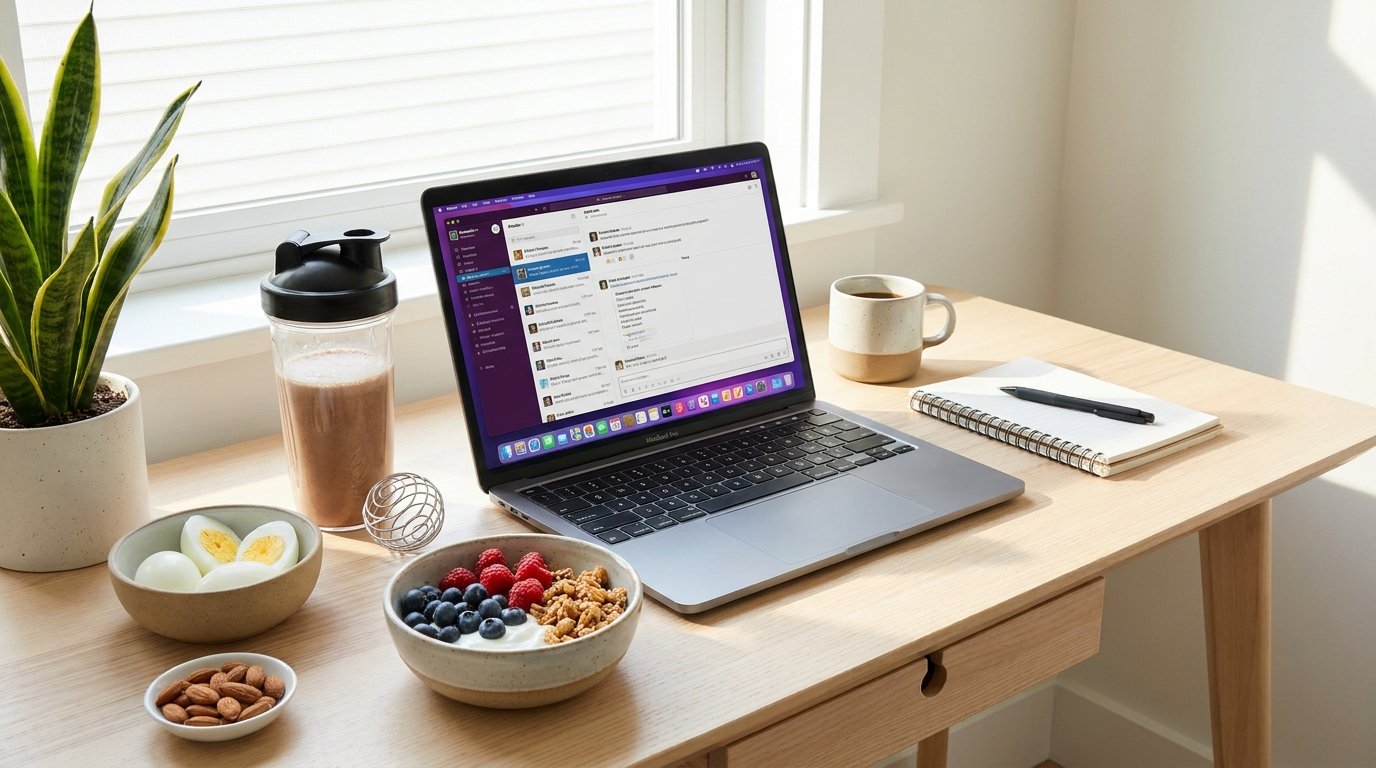
Practical Ways to Hit Protein Targets on Busy Work-from-Home Days
Quick Answer
Hit protein targets on busy work-from-home days by setting a clear daily goal (usually 1.6–2.2 g per kilogram of body weight), keeping high-protein foods visible and ready, anchoring protein to existing daily routines, using simple default meals and snacks, and tracking intake with minimal friction. Focus on 3–5 protein-containing feedings rather than perfection at every meal. Convenience systems beat willpower when meetings, deadlines, and household interruptions dominate the day.
Why Work from Home Days Make Protein targets Harder
Working from home removes the external structure of an office lunch break or commute. Meals become easier to skip, delay, or replace with low-protein convenience foods. Back-to-back video calls, childcare interruptions, and the constant proximity of snacks create an environment where protein intake often falls short even when intentions are good. The solution is not more motivation—it is better defaults, reduced decision fatigue, and environmental design that makes the high-protein choice the easy choice.
Core Principles for Reliable Protein Intake at Home
- Know your number – A clear daily target removes guesswork.
- Distribute across the day – 3–5 feedings of 25–40 g each work better than one or two large doses.
- Reduce friction – Ready-to-eat options outperform complex cooking on busy days.
- Anchor to existing habits – Attach protein to routines you already perform.
- Default meals beat daily creativity – Repeat simple combinations that require little thought.
- Track lightly – Enough data to stay honest, not so much that it becomes a chore.
Protein Target Guidelines
| Body Weight | Daily Protein Range (1.6–2.2 g/kg) | Practical Daily Target | Per-Feeding Goal (4 feedings) |
|---|---|---|---|
| 60 kg (132 lb) | 96–132 g | 110–120 g | 25–30 g |
| 75 kg (165 lb) | 120–165 g | 130–150 g | 30–40 g |
| 90 kg (198 lb) | 144–198 g | 160–180 g | 40–45 g |
| 100 kg (220 lb) | 160–220 g | 180–200 g | 45–50 g |
Shoulder training and grip work still require adequate protein for recovery and adaptation (Bent Arms vs. Straight Arms in Lateral Raises, The Hidden Mistake in Lateral Raises, 3 Lateral Raise Modifications, and Do Hand Grippers Really Work?).
Step-by-Step System for Busy Work-from-Home Days
- Set a specific daily protein target
Calculate 1.6–2.2 g per kilogram of body weight and write the number down. - Stock a short list of ready-to-eat protein sources
Keep 4–6 options that require zero or minimal preparation always available. - Create 2–3 default meals
Meals you can assemble in under 10 minutes without recipes. - Anchor protein to fixed points in the day
Examples: with morning coffee, after the first meeting block, at lunch, mid-afternoon, and with dinner. - Prepare or portion the night before when possible
Hard-boiled eggs, cooked chicken, portioned Greek yogurt, or overnight protein oats. - Use a simple tracking method
Phone note, basic app, or mental tally of protein “units” (each unit ≈ 25–30 g). - Build a rescue option for disrupted days
A ready-to-drink shake or carton of high-protein yogurt that can save the day in 30 seconds. - Review at the end of the day
Quick check: Did I land near the target? What got in the way? - Adjust the environment, not just effort
If protein is consistently low, change what is visible and easy to grab. - Protect the system during high-stress periods
Default to the simplest options rather than abandoning the target.
High-Protein Foods That Work on Busy Days
Zero-Preparation Options
- Greek yogurt or skyr (plain or lightly flavored)
- Cottage cheese
- Ready-to-drink protein shakes
- String cheese or cheese sticks
- Deli turkey or chicken slices
- Canned tuna or salmon (single-serve)
- Hard-boiled eggs (pre-cooked)
- Protein bars with solid macros (used selectively)
Minimal-Preparation Options
- Protein powder mixed with water or milk
- Pre-cooked chicken or turkey reheated
- Eggs scrambled or fried (5 minutes)
- Frozen frozen chicken sausages or turkey meatballs
- Microwaveable high-protein meals (checked for actual protein content)
- Cottage cheese or yogurt bowls with fruit or savory toppings
Sample Busy-Day Protein Schedules
Standard Work-from-Home Day (Target ≈ 140 g)
- 7:30 a.m. – Greek yogurt + scoop of protein powder (35 g)
- 10:30 a.m. – Ready-to-drink shake or cottage cheese (25–30 g)
- 1:00 p.m. – Leftover chicken or tuna with simple sides (35–40 g)
- 4:00 p.m. – Protein shake or Greek yogurt (25–30 g)
- 7:00 p.m. – Dinner with deliberate protein source (30–40 g)
High-Meeting / Low-Cooking Day
- Morning shake (30 g)
- Mid-morning Greek yogurt (20 g)
- Lunch: deli meat + cheese + simple sides (35 g)
- Afternoon ready-to-drink shake (30 g)
- Evening: pre-cooked protein + microwave vegetables (35 g)
Early Training + Work Day
- Post-workout shake (30–40 g)
- Mid-morning solid protein (25 g)
- Lunch and dinner as usual with protein emphasis
- Optional evening snack if still short of target
Environment Design That Makes Protein Automatic
- Keep Greek yogurt and shakes at eye level in the refrigerator
- Store protein powder and a shaker bottle in plain sight
- Pre-portion cooked meat in clear containers
- Place a small “protein station” near your workspace for afternoon feedings
- Remove or reduce the visibility of low-protein convenience snacks that displace better options
Tracking Without Friction
Effective tracking on busy days is simple:
- Count protein “servings” (each ≈ 25–30 g)
- Use a notes app with a running daily total
- Check labels once and remember the protein content of your default foods
Avoid systems that require weighing every item or logging recipes in detail during hectic periods.
Common Obstacles and Practical Fixes
| Obstacle | Why It Happens | Practical Fix |
|---|---|---|
| Skipping breakfast | Rushed start or no appetite | Liquid protein or yogurt the moment you start work |
| Back-to-back meetings | No time to prepare food | Ready-to-drink shakes or pre-portioned snacks at the desk |
| Afternoon energy crashes | Long gaps without protein | Scheduled mid-afternoon protein feeding |
| Decision fatigue | Too many food choices | Default meals only |
| Evening shortfall | Realized too late | Keep a rescue shake or high-protein yogurt available |
| Family or household interruptions | Unpredictable schedule | Pre-prepared options that require zero cooking |
Special Situations
Very Low Appetite Days
Rely more on liquid or semi-liquid sources (shakes, yogurt, cottage cheese).
High-Stress Deadlines
Drop variety completely and rotate 2–3 known high-protein options.
Training Days vs Non-Training Days
Keep the protein target similar; the difference in needs is smaller than most people think.
Shared Kitchen or Family Environment
Batch-cook protein sources that others will also eat, or keep personal high-protein items clearly labeled and accessible.
Strength training increases the value of consistent protein intake for recovery and adaptation (strength training guidance). Practical home-based approaches emphasize systems that survive real work-from-home chaos (home gym equipment prioritisation and budget home gym principles).
Frequently Asked Questions
How much protein do I actually need on work-from-home days?
Most active adults do well with 1.6–2.2 g per kilogram of body weight. The target stays the same whether you are in the office or at home.
What if I hate protein shakes?
Use Greek yogurt, cottage cheese, deli meat, eggs, canned fish, or pre-cooked poultry. Shakes are convenient, not mandatory.
Can I hit my target with only two meals?
It is possible but harder. Larger doses are less efficient for muscle protein synthesis, and many people struggle to consume enough in only two sittings.
How do I handle days when I have almost no time to eat?
Rely on ready-to-drink options and pre-portioned foods. A day of mostly liquid or minimal-prep protein is still far better than a very low-protein day.
Should I track protein every day?
Tracking for 1–2 weeks builds awareness. After that, many people can maintain intake with good systems and only occasional checks.
Is it a problem if protein is unevenly distributed?
Aim for reasonable distribution, but hitting the daily total is more important than perfect spacing on chaotic days.
What are the best high-protein snacks for the home office?
Greek yogurt, cottage cheese, ready-to-drink shakes, string cheese, hard-boiled eggs, and quality protein bars.
How can I stay consistent when the household schedule is unpredictable?
Pre-position protein options in multiple places (desk, refrigerator, bag) and default to the simplest choices whenever the day becomes chaotic.
Final Recommendation
Hitting protein targets on busy work-from-home days is a systems problem, not a motivation problem. Set a clear daily number, keep ready-to-eat protein sources visible and available, anchor feedings to existing routines, use default meals, and track lightly. When the environment and defaults are designed well, high protein intake becomes the path of least resistance even on hectic days.
Calculate your daily protein target today, choose four ready-to-eat sources to keep stocked, and create one default breakfast and one default lunch. Place a rescue shake or yogurt where you will see it during afternoon work blocks. Start implementing the system with your next meal—the consistent protein intake you build on ordinary work-from-home days is what supports long-term training progress.